
Five Packaging Decisions Foodservice Operations Should Make Before the Holiday Rush
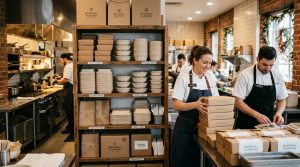
The holiday season can bring higher order volumes, special menus, catering opportunities, and increased takeout demand. But when demand rises quickly, packaging can become an operational challenge if the right products are not already in place.
A strong holiday packaging strategy isn’t just about ordering more of what you already use. It starts with looking at what your operation expects to handle and whether your current foodware can support that demand.
Menu changes, takeout volume, catering needs, storage capacity, lead times, presentation, and sustainability goals can all influence which packaging makes the most sense.
Planning these decisions before demand peaks can help foodservice businesses avoid last-minute substitutions, unnecessary costs, and packaging issues during one of the busiest periods of the year.
Here are five areas worth reviewing now.
1. Review Your Packaging Against Your Holiday Menu
Holiday menus often look different from everyday menus.
Seasonal dishes may require different container sizes, compartments, lids, or packaging materials. Larger portions may need additional capacity, while delicate or presentation-focused items may require packaging that protects the appearance of the food.
Before the holiday rush, review your upcoming menu and ask:
- Does each item have packaging that fits properly?
- Can the container protect the food during handling and transport?
- Are lids secure enough for delivery or takeout?
- Will the packaging maintain the presentation you want customers to receive?
The goal isn’t to find one container that works for everything. It’s to make sure the packaging supports the food and the way your operation serves it.
2. Plan for Changes in Takeout and Delivery Volume
Holiday demand doesn’t always increase evenly across every service channel.
A restaurant may see more takeout orders, while a hotel or catering operation may experience higher demand for large-format meals or off-site events.
Look at your expected order mix and determine whether your current packaging inventory can support the additional volume.
This includes considering:
- Takeout containers
- Lids and closures
- Sauce and condiment containers
- Bags
- Trays and catering packaging
- Specialty packaging for seasonal items
Planning ahead gives your team more time to identify gaps and evaluate alternatives instead of making rushed purchasing decisions when inventory is already running low.
3. Consider Storage and Inventory Capacity
Ordering additional packaging sounds simple until it arrives.
Holiday inventory can take up significant storage space, particularly when multiple container sizes, lids, bags, and accessories are involved.
Before placing a larger order, consider how much inventory your facility can realistically store and how quickly each item will be used.
A useful approach is to look at your expected demand alongside:
Current inventory + expected usage + lead time + available storage
This helps you avoid two common problems: ordering too little and running out during peak demand, or ordering too much and tying up valuable storage space and purchasing budget.
4. Check Lead Times Before You Need the Packaging
One of the biggest risks during a seasonal rush is waiting until demand is already increasing to place an order.
Standard packaging may be readily available, but customized foodware, branded packaging, and specialty products can require additional planning.
If your holiday program includes customized or less-common packaging, review lead times early and account for the time needed for production, shipping, receiving, and quality checks.
This is particularly important when packaging is part of the customer-facing experience.
A little advance planning can give your operation more flexibility if a product needs to be adjusted or an alternative needs to be considered.
5. Revisit Presentation and Sustainability Goals
Holiday packaging is not only an operational decision. It can also affect how customers experience your brand.
Packaging should be practical, but it should also align with the way you want your food and brand to be presented.
At the same time, many foodservice businesses are looking for ways to incorporate more sustainable packaging into their operations.
Before the holiday season, consider whether your packaging choices support your current sustainability objectives without creating unnecessary operational complications.
The right solution will depend on your menu, service model, budget, storage limitations, and operational requirements.
Plan Before the Rush
The most effective holiday packaging strategy isn’t necessarily about buying more packaging. It’s about making better packaging decisions before demand puts pressure on your operation.
By reviewing your menu, expected volume, storage capacity, lead times, presentation requirements, and sustainability priorities early, you can identify potential gaps while there is still time to address them.
And if your current packaging isn’t meeting your operational needs, planning early gives you the opportunity to explore alternatives rather than settling for whatever is available at the last minute.
Need help reviewing your packaging requirements?
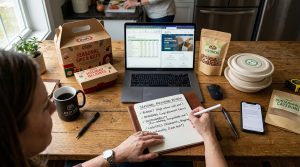
DSP works with foodservice businesses to identify cost-effective foodware and packaging solutions based on their operational needs, quality requirements, sustainability goals, and growth plans.
Would you be open to a packaging assessment to see where your current setup could be improved before the holiday rush?