
When Is “Good Enough” No Longer Good Enough?
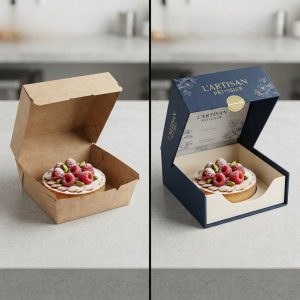
Sometimes, the problem isn’t that something is wrong. It’s that something could work much better.
In food and hospitality, businesses make hundreds of small product decisions every day.
Which container to use.
Which cup fits the beverage.
Which bag is easiest for takeaway orders.
Which packaging protects the product.
Which disposable items the team can rely on.
Once something works, it is easy to stop questioning it.
The container holds the food.
The cup holds the drink.
The bag carries the order.
So why change it?
Because “works” and “works well” are not always the same thing.
A product can do its basic job while still creating small frustrations for your team, your customers, or your brand. And because these details are repeated hundreds or thousands of times, they can become more important than they initially appear.
The Problem With “Good Enough”
“Good enough” isn’t necessarily a bad choice.
In fact, it can be the right choice when a product meets the actual requirements of the business.
The problem begins when “good enough” becomes the default without being reconsidered.
A packaging item may have been selected years ago because it was readily available, affordable, or simply what the business was already using.
Since then, things may have changed.
Your menu may be different.
Your order volume may have increased.
Your delivery mix may have changed.
Your customers may expect something different.
Your brand may have evolved.
But the product stayed the same.
That’s when a useful question becomes:
Is this still the best fit for what we’re trying to do today?
Small Details Can Become Part of the Customer Experience
Customers may not consciously evaluate every piece of packaging they receive.
But they experience it.
They notice when a container is difficult to open.
They notice when a cup doesn’t feel right in their hand.
They notice when a bag is awkward to carry.
They notice when food shifts around inside its container.
They notice when packaging makes a carefully prepared product look ordinary.
None of these things necessarily means the packaging is defective.
It simply means there may be room for a better experience.
And sometimes, that difference comes down to a surprisingly small detail.
Functionality Is More Than “Does It Work?”
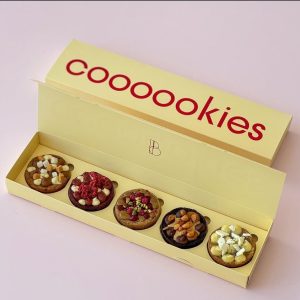
One of the easiest ways to evaluate an everyday foodservice product is to ask whether it performs its job.
But that question can be expanded.
Instead of asking:
“Does this container hold the food?”
Ask:
- Does it fit the portion properly?
- Is it easy for the customer to open?
- Does it protect the product during transport?
- Does it keep different components where they should be?
- Is it practical for staff to assemble?
- Does it stack efficiently?
- Does it make sense for the way customers receive and consume the product?
The same applies to cups, bags, trays, takeaway packaging, and other foodservice items.
A product can technically work while still creating unnecessary friction.
The goal isn’t to change something simply because you can. It’s to recognize when a better fit could make a meaningful difference.
When the Product Has Changed, the Packaging May Need to Change Too
Businesses evolve.
A café might move from mostly dine-in customers to a larger takeaway and delivery business.
A bakery might introduce premium gift boxes alongside everyday products.
A restaurant might add meal bundles, larger portions, or products designed specifically for takeaway.
A hotel might start offering branded food products for guests to take home.
When the product or customer experience changes, the packaging supporting it may need another look.
What worked for the original use case may no longer be the best solution.
This doesn’t mean replacing everything.
Sometimes, one SKU, one size, one material, or one packaging format is all that needs to be reconsidered.
Your Packaging Should Make Sense for the Product
The right packaging isn’t necessarily the most expensive packaging.
It’s the packaging that makes sense for the product, the operation, and the customer.
Consider a bakery selling delicate pastries.
A basic box may protect the product adequately. But if the pastry is part of a premium collection, the business may also care about how the box presents the product when it is opened.
Or consider a beverage business.
A cup may hold the drink perfectly well. But if the lid doesn’t seal securely, the cup is difficult to carry, or the proportions don’t suit the drink, the customer experience can still suffer.
The question isn’t:
“Can we find something more premium?”
It’s:
“What does this product actually need from its packaging?”
That distinction matters.
The Brand Experience Doesn’t Stop at the Logo
Branding is often thought of as logos, colors, fonts, and printed materials.
But customers also experience a brand through physical details.
The way a package opens.
The way a product sits inside the box.
The material they touch.
The way an order is carried.
The amount of thought that seems to have gone into the presentation.
This is especially important for businesses selling products where presentation is part of the value — specialty food, pastries, desserts, beverages, gift sets, chef-made products, and takeaway collections.
A carefully considered package can reinforce the feeling a business is trying to create.
And sometimes, that doesn’t require a complete redesign.
It can be as simple as choosing a better-fitting format or introducing a more appropriate material.
A Better Question to Ask
Instead of reviewing products only when something goes wrong, businesses can periodically ask:
“If we were choosing this product today, would we choose the same one?”
That’s a very different question from:
“Is there anything wrong with what we’re using?”
If nothing is wrong, the answer may still be yes.
But you might also discover that:
- the product no longer fits your current operation
- a different size could reduce unnecessary space
- another format could improve presentation
- a different material could make handling easier
- a better closure could improve the customer experience
- custom branding could make the packaging feel more connected to the product
- a reusable or more considered format could create another opportunity for the brand
The point isn’t to create change for the sake of change.
It’s to make sure the products you’re relying on still make sense.
Look at What Customers Touch Every Day
A useful place to start is with the products customers interact with most frequently.
Look at your:
- Takeaway containers
- Cups and lids
- Food bags
- Bakery boxes
- Trays and inserts
- Gift packaging
- Delivery packaging
- Product labels and sleeves
- Reusable foodservice items
Pick one.
Then ask your team:
What works well about this?
And just as importantly:
What could work better?
You may uncover something that has become so familiar that nobody notices it anymore.
That small observation can lead to a better specification, a different format, or simply a more suitable product.
Better Doesn’t Always Mean More Expensive
There’s another important misconception worth addressing.
Moving beyond “good enough” doesn’t automatically mean choosing the most expensive option.
Sometimes, a better solution is actually about better fit.
A container that uses space more efficiently.
A box designed around the product rather than a generic size.
A bag that’s easier to carry.
A cup and lid combination that works better together.
A package that protects the product without using unnecessary material.
A design that allows a business to use the same packaging across multiple suitable applications.
The value comes from how well the solution works — not simply from how much it costs.
When Is It Actually Time to Reconsider?
There isn’t one rule for every business.
But a product may deserve a second look when:
Your product has changed.
The packaging was designed for something you no longer sell in the same way.
Your customers use it differently.
Takeaway, delivery, gifting, and consumption habits can change.
Your team keeps working around the packaging.
Repeated small adjustments can be a sign that the format isn’t ideal.
The packaging doesn’t reflect the product anymore.
A premium product presented in very basic packaging can create a disconnect.
You’re hearing the same customer feedback repeatedly.
Small complaints can reveal a recurring issue.
Your brand has evolved.
Packaging that made sense when you started may not represent where the business is today.
You’re introducing something new.
A new product is an opportunity to reconsider the packaging from the beginning rather than automatically using an existing format.
The Goal Isn’t to Replace Everything
This is perhaps the most important point.
You don’t need to rethink every product in your operation.
You don’t need to replace something simply because a newer option exists.
And you don’t need premium packaging for every customer interaction.
The better approach is to identify the places where a small improvement could have a noticeable effect.
Start with what customers see, touch, carry, open, and use most often.
Then look at whether the product you’re using is genuinely the best fit for that experience.
Sometimes, you’ll decide that it is.
And sometimes, you’ll realize that you’ve been using something because it works — not because it works best.
What Could Work Better?
“Good enough” is a useful place to start.
It keeps businesses moving. It prevents unnecessary changes. It gives teams products they can rely on.
But it shouldn’t always be where the conversation ends.
The next time you look at a container, cup, bag, box, or other everyday foodservice item, ask yourself:
If we were choosing this today, knowing what we know now, would we still choose it?
If the answer is yes, great.
If the answer is maybe, that’s worth exploring.
Because sometimes, the opportunity isn’t to fix something that’s broken.
It’s to find something that simply works better.