
What If Your Best Holiday Idea Is Already on Your Menu?
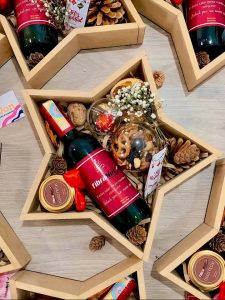
Holiday planning often starts with a familiar question:
What should we add for the season?
A limited-time drink. A special dessert. A gift set. A holiday bundle.
But adding something new also means adding another decision. New ingredients, new packaging, new purchasing requirements, new preparation steps, and another item for the operation to manage.
There may be another option.
What if the holiday opportunity is already on your menu?
You may just need to look at something you already sell and ask a different question:
Could customers buy it in a completely different way?
Sometimes a seasonal opportunity does not require a new product. It can come from changing the format, quantity, presentation, or occasion around something the business already offers.
If that new opportunity requires custom packaging, however, timing matters.
Custom packaging takes time to develop and manufacture. Product development, sampling and testing can take approximately 1 month before an order is placed, followed by approximately 2–3 months for custom manufacturing from order to delivery.
That means businesses considering custom holiday packaging may need approximately 4 months from concept to delivery.
If you want custom packaging ready for the holiday season, the time to start planning is now.
The Product May Not Need to Change
Consider a restaurant that already sells a popular dessert.
The dessert itself may not be new or seasonal. But what happens if it is offered as:
- A multi-serving holiday order
- A take-home option
- A giftable package
- A catering-size quantity
- A bundled add-on
- A pre-ordered item for an event or gathering
The product has not necessarily changed.
The way the customer buys it has.
That distinction matters because seasonal demand is not always about convincing customers to try something completely new.
Sometimes it is about making an existing product fit a different holiday occasion.
And if that new format requires custom packaging, the packaging timeline needs to be considered before the holiday season gets too close.
Start With What Already Works
Before creating a new seasonal product, look at the products customers already know.
Which items are frequently ordered?
Which products work well for groups?
Which ones could be purchased in larger quantities?
Which products could travel well?
Which could become part of a gift, gathering, catering order, or take-home experience?
This is where the question becomes more interesting:
What could this product become if the customer were buying it for a different occasion?
A product normally purchased for one person might work for a family gathering.
An individual item might become a multi-pack.
A regular menu item might become part of a holiday bundle.
A foodservice item that is normally served in the restaurant might be packaged for customers to take home.
The opportunity is not necessarily a new product.
It may be a new use for an existing one.
Four Ways to Rethink an Existing Product
There are several ways a familiar product can take on a different role during the holidays.
1. Change the Quantity
The simplest change may be how much the customer receives.
Instead of selling one portion, could the same product make sense as a package of four, six, twelve, or another quantity?
This can make an existing item more relevant for:
- Family gatherings
- Office events
- Parties
- Catering
- Holiday meals
- Group orders
The underlying product stays familiar, but the purchase occasion changes.
2. Change the Format
Could the same product be offered in a format that makes it easier to transport, share, store, or serve?
For example, a product normally prepared for immediate consumption may have another opportunity as a take-home option.
The question is not simply whether the product can be put into another container.
It is whether the new format makes sense for how the customer wants to use it.
That means considering things such as portion size, handling, storage, transportation, presentation, and how the customer will actually consume the product.
3. Change the Presentation
Sometimes the product itself does not need to change much at all.
The presentation can change how customers perceive and use it.
An existing item could become part of a holiday assortment, a giftable presentation, a special bundle, or a larger order designed for an occasion.
The product may be familiar.
The reason for buying it is what changes.
4. Change the Occasion
This may be the biggest opportunity.
Ask where the product is normally consumed and where else it could make sense.
A restaurant menu item may normally be purchased for lunch or dinner.
Could it also make sense for:
- A holiday office gathering?
- A family celebration?
- A catering order?
- A customer taking food home?
- A host looking for something convenient to share?
The product does not have to become something entirely different.
It just needs to solve a different customer need.
The Packaging Has to Follow the New Idea
This is where an otherwise simple seasonal idea can become an operational decision.
If an existing product is being sold in a new format, quantity, or presentation, the packaging may need to change with it.
A package designed for one serving may not make sense for a multi-unit order.
A container that works for dine-in service may not be appropriate for a take-home product.
A standard presentation may not work for something intended to be gifted or shared.
The right question is not:
“What holiday packaging should we buy?”
It is:
“What does the new customer use case require the packaging to do?”
That can lead to very different requirements around size, quantity, functionality, presentation, handling, storage, and transportation.
For custom packaging, those requirements also need to be considered early enough to allow time for development, sampling, testing, and manufacturing.
Custom manufacturing can take approximately 2–3 months from order to delivery, with product development, sampling and testing requiring approximately another month before the order is placed.
So if the goal is to have custom holiday packaging ready for the season, waiting until the holiday rush is close may not leave enough time.
Before Creating Something New, Ask These Questions
If you are looking at your existing menu for a seasonal opportunity, start with the product rather than the packaging.
Ask:
What already sells well?
Start with products customers already understand and purchase.
Could it serve more people at once?
Consider larger quantities, multi-packs, or group-oriented formats.
Could customers take it somewhere else?
Think beyond the restaurant, store, or normal point of consumption.
Could it work for an event or gathering?
A familiar product may have another use when customers are buying for a group.
Could it become part of a bundle?
Look at whether an existing product can be combined with other items to create a different purchasing occasion.
What would have to change operationally?
A new format may affect preparation, storage, handling, packaging, labeling, or fulfillment.
Does the idea actually make sense at the required quantity?
A seasonal concept needs to work operationally, not just look appealing on a menu.
Does the packaging timeline allow enough time?
If custom packaging is involved, it is worth planning early enough to allow for approximately 4 months from concept to delivery.
The Best Holiday Idea May Be an Operationally Simple One
There is a temptation to make seasonal offerings feel completely new.
But new does not always mean better for the operation.
A familiar product that can be sold in a different quantity or format may be easier for customers to understand and easier for the business to manage than an entirely new offering.
That does not mean every existing product has a hidden holiday opportunity.
It means the search for one does not necessarily have to begin with creating something from scratch.
Sometimes the better question is:
What are we already good at selling, and how could customers use it differently during the holidays?
That shift can open up possibilities that are easy to overlook when seasonal planning starts with a blank page.
It is also worth considering the packaging timeline at this stage. A custom solution may require approximately 1 month for product development, sampling and testing, followed by 2–3 months for manufacturing and delivery.
Starting early gives the business more time to develop and finalize the right solution before the holiday season.
The Opportunity May Be in the Format, Not the Product
Holiday demand can create new customer needs without requiring a completely new product.
Customers may be looking for something to share.
Something to take home.
Something to bring to an event.
Something to order in advance.
Something to give as a gift.
Something in a larger quantity.
If a business already sells something that could meet one of those needs, the opportunity may be closer than it appears.
The next step is to determine what would need to change around the product to make that use case practical.
That could mean a different quantity.
A different format.
A different presentation.
Or a different packaging solution.
The important part is starting early enough to make the idea possible.
Where DSP Fits Into the Conversation
This is the kind of decision where the product and the packaging should be considered together.
A change in format or quantity can affect the specifications, functionality, quantities, branding, cost, and operational requirements of the packaging solution.
DSP works with businesses to evaluate those requirements and identify sourcing and manufacturing approaches based on how the solution needs to work within the operation. DSP has more than 20 years of global sourcing and manufacturing experience and works with a vetted network of manufacturing partners.
The goal is not to introduce a new product simply because it is the holiday season.
It is to look at the opportunity from the customer’s perspective and then determine what the business would need to make that opportunity work.
For businesses considering custom holiday packaging, timing needs to be part of that conversation from the beginning. With approximately 1 month for product development, sampling and testing and another 2–3 months for custom manufacturing and delivery, the total lead time can be around 4 months from concept to delivery.
Before You Add Something New, Look at What You Already Have
Your next holiday idea may not be sitting in a product catalog.
It may already be on your menu.
Take a product customers already know and ask:
Could they buy it in a completely different way?
If the answer is yes, the next questions become much more practical:
What quantity would make sense?
What format would support it?
How would customers use it?
What would need to change operationally?
And what packaging would make the new use case work?
Sometimes the most interesting seasonal opportunity is not a new product.
It is a new way to sell something you already know works.
If custom packaging is part of the idea, now is the time to start planning. Waiting until the holiday season is close may not leave enough time for development, sampling, testing, manufacturing, and delivery.
Have an Existing Product You’re Considering for the Holidays?
Send DSP the product, current packaging, specification, photo, or idea. We can explore what would need to change around the format, quantity, or packaging to support the opportunity.
Planning custom holiday packaging? Start the conversation now.