
When evaluating packaging, it is easy to focus on getting every detail exactly right.
The material. The dimensions. The thickness. The finish. The printing. The color. The closure. The quantity.
But every specification can affect the final cost.
That does not mean businesses should compromise on quality or operational requirements. It means procurement teams should understand which specifications are essential, which are negotiable, and which may be adding cost without creating meaningful value.
For foodservice and hospitality operations, the right packaging specification is not necessarily the most customized one. It is the one that performs as needed while making sense from a cost, sourcing, and operational standpoint.
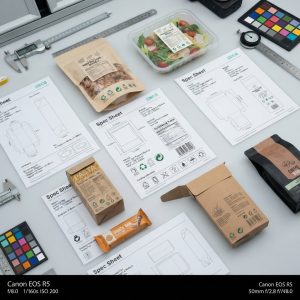
Specifications Can Have a Bigger Cost Impact Than Expected
A small change in a packaging specification can sometimes affect more than the product itself.
Changes to dimensions, materials, construction, printing, or finishing may influence manufacturing requirements, minimum order quantities, shipping efficiency, storage, and replenishment.
For example, a highly specific size may work perfectly for one menu item but require a separate SKU, additional inventory, or a less efficient manufacturing setup.
Likewise, a custom feature may look valuable during product development but provide little operational benefit once the product is in use.
The question is not simply:
“Can we make it this way?”
It is:
“Does this specification solve a problem that is worth paying for?”
Start With the Operational Requirement
Before reviewing individual specifications, it helps to identify what the packaging actually needs to accomplish.
Does it need to protect the product during transport?
Does it need to maintain temperature or presentation?
Does it need to fit a particular food item or piece of equipment?
Does it need to withstand a specific handling environment?
Does it need to support branding or sustainability requirements?
These requirements should drive the specification.
Once the essential requirements are established, procurement teams can evaluate where there may be room for flexibility.
A specification that is critical to performance should not be removed simply to lower the unit price. But a specification that exists primarily because “that is how we have always ordered it” may deserve another look.
More Customization Does Not Always Mean More Value
Customization can be extremely useful, particularly when a standard product does not meet an operation’s needs.
But customization should have a purpose.
A custom size might reduce product waste or improve presentation. A specific material might support sustainability objectives. A particular construction could improve durability or product protection.
Those are meaningful reasons to customize.
The challenge comes when packaging accumulates specifications over time without anyone revisiting whether each one is still necessary.
A procurement team may eventually be managing multiple variations of products that perform essentially the same function.
That can create unnecessary complexity across purchasing, inventory, storage, and replenishment.
Look Beyond the Unit Price
Packaging cost should not be evaluated solely by the price per piece.
A specification can influence the broader economics of the product.
Consider:
- Minimum order quantities
- Freight and shipping efficiency
- Storage requirements
- Inventory levels
- Replenishment frequency
- Number of SKUs
- Product availability
- Manufacturing flexibility
- Product waste
- Operational handling
A packaging solution with a slightly higher unit cost could potentially make more sense if it reduces waste, simplifies inventory, or improves operational efficiency.
Likewise, a lower-priced product may not actually be the better option if its specifications create additional costs elsewhere.
The goal is to understand the total impact of the specification, not simply the number on the quotation.
Standardization Can Be a Cost Strategy
Standardization is another area worth reviewing.
If several packaging products serve similar purposes, there may be opportunities to consolidate specifications or reduce unnecessary variations.
Fewer SKUs can make purchasing and inventory management easier. Standardized products can also simplify replenishment and reduce the number of specifications a procurement team needs to manage.
However, standardization should not become an excuse to use the same product for everything.
The right balance is to standardize where it makes operational sense while maintaining the specifications that genuinely matter.
Revisit Specifications When the Business Changes
Packaging requirements should not be treated as permanent.
Menu changes, increased takeout volume, new locations, sustainability initiatives, changes in suppliers, or shifts in customer expectations can all create reasons to reassess existing specifications.
A product that made sense when an operation was smaller may not be the most efficient solution at a larger scale.
Likewise, a packaging specification developed several years ago may no longer reflect current sourcing options or manufacturing capabilities.
Periodic specification reviews can help identify opportunities before unnecessary costs become embedded in the procurement process.
The Right Question for Procurement Teams
The goal is not to eliminate specifications.
It is to make sure every important specification has a reason behind it.
Before approving a highly customized packaging solution, ask:
What problem does this specification solve?
Then ask:
Is that problem significant enough to justify the additional cost or complexity?
If the answer is yes, the specification may be worth keeping.
If the answer is unclear, it may be an opportunity to explore alternatives.
A Better Approach to Packaging Sourcing
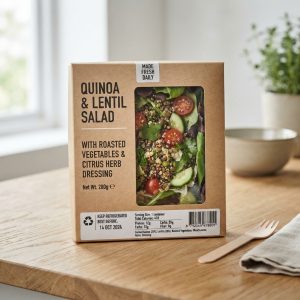
Packaging decisions are rarely just about finding a product that meets a list of requirements.
They involve balancing branding, quality, cost, sustainability, operational needs, and supply considerations.
At Direct Source Procurement, we take a tailored approach to sourcing and manufacturing. Rather than working from a fixed product catalog, we evaluate each customer’s requirements and identify sourcing and manufacturing approaches that align with their operational objectives.
With more than 20 years of global sourcing and manufacturing experience and access to a vetted network of manufacturing partners, DSP helps businesses evaluate tailored product solutions with cost, quality, sustainability, scalability, and supply continuity in mind.
Because the best packaging specification is not necessarily the one with the most features.
It is the one that delivers the right performance without creating unnecessary cost or complexity.