
Why the Right Supplier Mix Can Matter More Than Having Fewer Suppliers
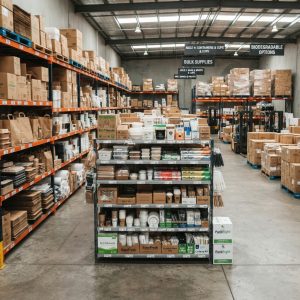
Working with one supplier for most or all of your foodware and packaging can seem like the simplest approach.
Fewer purchase orders. Fewer contacts to manage. Fewer products to keep track of.
But simplicity does not always mean a stronger sourcing strategy.
As product requirements, demand, costs, sustainability goals, and operational needs change, relying too heavily on a single supplier can create limitations. The supplier that works well for one product category may not necessarily be the best fit for another.
A more strategic approach is to evaluate where your current supplier relationships are creating value and where additional sourcing options could improve your overall procurement strategy.
One Supplier Does Not Always Mean One Best Solution
Different packaging and foodware products can have very different requirements.
A standard stock item may require a completely different sourcing approach than a custom-branded product. Sustainable materials may have different manufacturing capabilities, minimum order quantities, or lead times than conventional alternatives.
Instead of asking, “Can our current supplier provide this?” procurement teams can also ask:
“Is this the most appropriate sourcing solution for what we need?”
That shift can open the door to better options without requiring an operation to abandon valuable supplier relationships.
Where a Broader Supplier Network Can Add Value
1. Better Product Fit
Not every manufacturer specializes in the same materials, formats, customization, or production volumes.
Access to multiple qualified suppliers can make it easier to match a product requirement with the right manufacturing capability rather than forcing every requirement into the same supply model.
DSP works with a network of Fortune 500-approved manufacturing partners to help identify solutions based on each customer’s branding, quality, cost, and sustainability objectives.
2. More Competitive Cost Opportunities
The lowest quoted unit price is not always the lowest overall cost.
Specifications, production quantities, materials, customization, freight, and reordering requirements can all influence the economics of a packaging program.
Comparing sourcing options can help procurement teams identify opportunities to improve cost without automatically compromising quality.
DSP’s experience includes identifying cost-effective solutions through data-driven sourcing and manufacturing relationships.
3. Greater Supply Flexibility
A sourcing strategy should account for what happens when demand changes or a particular product becomes difficult to replenish.
Having qualified alternatives can provide additional flexibility when specifications, quantities, production requirements, or availability change.
The goal is not to maintain unnecessary suppliers. It is to avoid building a supply strategy that depends entirely on one source when other viable options may exist.
4. More Options for Sustainability
Sustainability requirements can also change the sourcing equation.
Businesses may be evaluating compostable, biodegradable, recycled, reusable, or plant-based materials while still needing to meet cost and operational requirements.
DSP’s product portfolio includes materials such as PLA/CPLA, bagasse, palm leaf, bamboo, recycled materials, and other compostable and biodegradable options.
Having access to different manufacturing capabilities can make it easier to evaluate alternatives based on the actual application rather than choosing from a single supplier’s available catalog.
The Goal Is Not More Suppliers. It Is Better Sourcing.
Supplier diversification can become counterproductive when it simply creates more vendors, more administrative work, and more complexity.
The objective should be more strategic than that.
A strong sourcing model considers which supplier or manufacturing partner is best positioned for each requirement while maintaining appropriate quality, cost, service, and supply continuity.
That could mean consolidating certain products with one supplier while sourcing specialized or custom products elsewhere.
It could also mean periodically benchmarking existing products against alternative manufacturing options to make sure the current solution still makes sense.
A Better Question for Procurement Teams

Instead of asking:
“How many suppliers do we have?”
Consider asking:
“Do our supplier relationships give us the right combination of cost, quality, flexibility, and supply support?”
That is a much more useful measure of sourcing performance.
At Direct Source Procurement, we take a tailored approach to sourcing and manufacturing rather than working from a fixed product catalog. Recommendations are built around the customer’s operational requirements, branding, quality expectations, cost objectives, and sustainability goals.
Because sometimes the best sourcing strategy is not finding one supplier that can provide everything.
It is knowing when to use the right supplier for the right need.