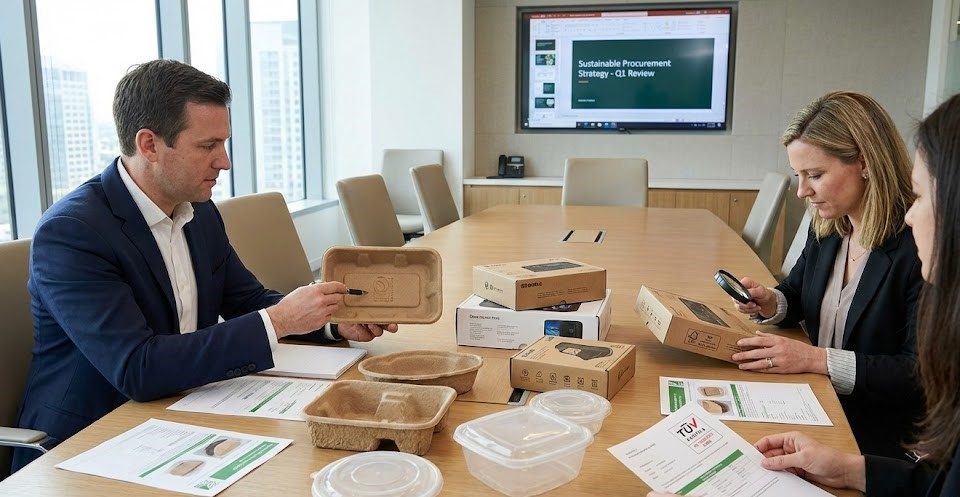
Corporate buyers are under growing pressure to validate sustainability claims across their supply chains. Environmental promises are no longer accepted at face value, especially in industries such as foodservice, retail, healthcare, and institutional procurement. As a result, third-party verifications have become a critical trust signal in B2B relationships.
Third-party certifications provide independent proof that sustainability claims are accurate, measurable, and aligned with recognized global standards. For corporate buyers managing risk, compliance, and brand reputation, verified packaging is no longer optional, it is expected.
Why Third-Party Verification Matters More Than Ever
In a crowded sustainability landscape, language alone is not enough. Any supplier can label packaging as “eco-friendly” or “green,” but without verification, those claims are increasingly viewed as marketing rather than fact.
Third-party certifications such as FSC (Forest Stewardship Council), BPI (Biodegradable Products Institute), and TÜV Austria demonstrate that packaging materials meet strict criteria for responsible sourcing, compostability, or environmental safety. These certifications require testing, audits, and documentation, which removes ambiguity for buyers.
For corporate procurement teams, verification simplifies decision-making. It transforms sustainability from a subjective claim into a measurable qualification.
How Certifications Support Corporate Procurement Processes
Large organizations operate within complex procurement frameworks designed to reduce risk. Third-party certifications align seamlessly with these systems.
Verified suppliers move more efficiently through:
- Supplier qualification reviews
- RFP and RFQ processes
- Compliance and legal checks
- ESG and sustainability reporting requirements
Because certifications provide standardized documentation, procurement teams spend less time validating claims and more time evaluating fit and cost. This reduced friction can be the difference between advancing to final consideration or being filtered out early.
In many cases, verified certifications are not just preferred but required for enterprise contracts.
Key Certifications Corporate Buyers Recognize
Different certifications serve different purposes, and corporate buyers often look for specific marks depending on their goals and regions.
Commonly recognized certifications include:
- BPI for compostable products in North America
- FSC for responsible fiber sourcing and forest management
- TÜV Austria for compostability standards in European and global markets
- OK Compost certifications for industrial or home composting contexts
These certifications assure buyers that packaging materials have been independently tested and meet defined performance and environmental thresholds.
Reducing Risk and Preventing Greenwashing
Greenwashing concerns have increased scrutiny on sustainability claims. Brands that cannot substantiate their environmental messaging risk reputational damage, regulatory attention, and loss of buyer trust.
Third-party verification reduces this risk by:
- Providing objective proof of claims
- Ensuring alignment with legal definitions of sustainability
- Supporting accurate marketing and labeling
For corporate buyers, verified packaging reduces exposure to compliance issues and public criticism. For suppliers, it protects brand credibility and supports long-term partnerships.
Building Confidence Beyond Procurement Teams
Third-party certifications also play a role beyond procurement. End-users, stakeholders, and consumers increasingly recognize certification logos and associate them with transparency and responsibility.
When certifications are displayed on packaging or supporting materials, they:
- Reinforce trust at the point of use
- Support sustainability communication efforts
- Align internal teams around verified goals
This visibility strengthens brand perception not only with buyers, but also with employees, partners, and customers.
Maintaining Certifications Over Time
Certifications are not one-time achievements. Most third-party verifications require renewal every 24 to 36 months, depending on the standard. Audits, documentation updates, and ongoing compliance are part of maintaining credibility.
Working with compliant manufacturers and suppliers simplifies this process. Experienced partners monitor regulatory updates, material changes, and audit timelines to ensure certifications remain valid as standards evolve.
For corporate buyers, suppliers that actively maintain certifications demonstrate long-term reliability and operational maturity.
Certification as a Competitive Advantage
In competitive B2B markets, third-party verification is more than a checkbox. It is a strategic advantage.
Verified suppliers often:
- Qualify for larger, longer-term contracts
- Gain access to sustainability-driven buyers
- Shorten sales cycles by reducing objections
- Strengthen ESG alignment with corporate clients
As sustainability becomes embedded in corporate governance, verified packaging positions suppliers as trusted partners rather than interchangeable vendors.
From Marketing Claim to Measurable Value
The shift toward third-party verification reflects a broader change in how sustainability is evaluated. Corporate buyers want data, documentation, and accountability, not promises.
Third-party certifications transform sustainability from a marketing message into measurable value. They support procurement efficiency, reduce risk, and build the trust that long-term B2B relationships depend on.
Ready to Strengthen Buyer Trust With Verified Packaging?
Navigating certifications and verification requirements can be complex, especially when serving enterprise clients across multiple regions. Our team helps brands identify the right third-party certifications, work with compliant manufacturers, and position their packaging for corporate procurement success. Connect with our team or book a call to ensure your sustainability claims are backed by trusted verification.
FAQs
Q1: Which certifications carry the most weight with corporate buyers?
BPI for compostability, FSC for fiber sourcing, and TÜV Austria for European and global markets are among the most recognized.
Q2: Are small brands required to obtain certifications?
Not legally in most cases, but certifications are often essential for winning enterprise and institutional contracts.
Q3: How can certifications be displayed?
Through printed marks on packaging, digital verification links, or QR codes that lead to certification details.
Q4: What is the typical renewal timeline?
Most certifications require renewal every 24 to 36 months, along with updated documentation and audits.
