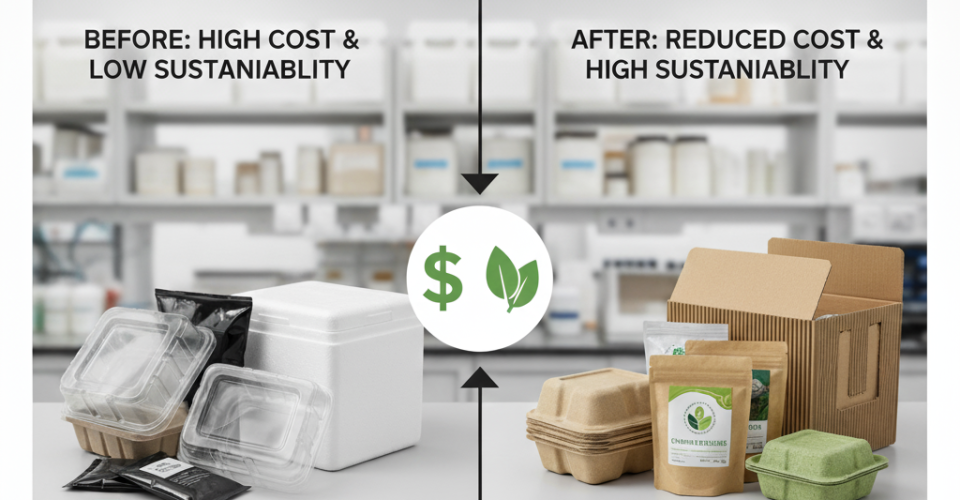
Sustainability doesn’t have to come at a higher cost. Many businesses assume eco-friendly packaging is more expensive, but smart material swaps can save money while helping the environment. In 2025, knowing which materials to switch is key to staying competitive without compromising quality.
Why Material Choice Matters
Every packaging material carries its own costs and environmental impacts. Paper and fiber are lightweight and recyclable, though they sometimes require extra coatings to resist moisture. Plastic is durable and protects products well, but it relies on petroleum and can have higher disposal costs. Biodegradable polymers offer an eco-friendly alternative, though prices may be higher for smaller orders. By looking at the full lifecycle—from production to disposal, companies can identify opportunities to cut expenses while boosting sustainability.
Which Material Swaps Work Best
Some of the most effective swaps involve replacing rigid plastics with molded fiber. This reduces petroleum use and often lowers per-unit costs for trays, clamshells, and rigid containers. Multi-layer films can be switched to mono-materials, which simplifies recycling and reduces processing costs. Using recycled content instead of virgin resin, such as rPET or rPP, can lower raw-material costs while strengthening sustainability reporting. Foam or coated plastics can be replaced with paperboard or bagasse to reduce landfill impact and often qualify for eco-certifications.
Balancing Performance and Cost
Not every sustainable material works for every product. It’s important to test new materials to ensure they meet key performance requirements. Barrier strength must be sufficient to keep food fresh and prevent leaks, heat resistance should allow packaging to hold hot items safely, and durability must ensure packages survive shipping and storage. Pilot tests, drop tests, and real-world trials help avoid surprises before a full rollout.
Long-Term Benefits
Switching materials offers more than immediate cost savings. Reducing waste can lower landfill fees, while eco-conscious packaging improves brand reputation. Certain regions provide tax breaks or incentives for using certified sustainable materials, creating further economic benefits. Fewer, versatile materials also simplify inventory management, storage, and operational efficiency.
How DSP Helps
Direct Source Procurement assists businesses in identifying, testing, and sourcing materials that cut costs while supporting sustainability. With access to a global network of verified manufacturers, DSP ensures that every material swap delivers measurable ROI, maintains quality, and stays compliant with certifications. Whether you need fiber alternatives for trays or recycled plastics for cups, DSP helps create packaging solutions that work across all SKUs and production lines.
FAQs
- What is a material swap?
Replacing one packaging material with another to achieve cost savings, sustainability benefits, or performance improvements. - Do recycled materials always cost less?
Not always. Prices fluctuate based on sourcing and availability, but strategic planning and bulk purchasing often result in long-term savings. - Which industries benefit most from switching materials?
Foodservice, retail, healthcare, and hospitality frequently see immediate financial and environmental ROI. - How can brands test new materials effectively?
Conduct pilot runs, drop tests, durability evaluations, and gather customer feedback before full rollout.
Which certifications verify sustainable materials?
Look for FSC, ASTM D6400, and BPI certifications for eco-compliance and industry credibility.
