
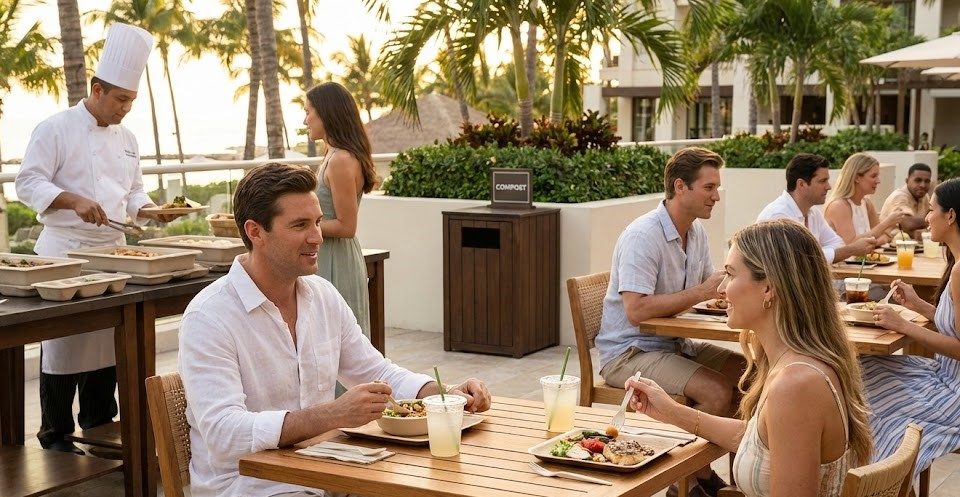
Luxury resorts and casinos are built on experience, how guests feel the moment they arrive, dine, relax, and return home. Today, sustainability has become an inseparable part of that experience. From eco-conscious travelers to corporate event planners, guests increasingly expect hospitality brands to demonstrate visible environmental responsibility, especially in foodservice operations.
Food packaging, once overlooked, now plays a critical role in shaping brand perception. Eco-first foodservice models show that compostable packaging and waste-conscious systems can enhance guest satisfaction, reduce operational costs, and strengthen long-term brand value, without compromising luxury.
Why Sustainability Now Matters in Premium Hospitality
Sustainability is no longer a “nice to have” in hospitality; it’s an expectation. Travelers are more informed than ever, and many actively choose resorts, casinos, and destinations that align with their values. Visible practices, such as compostable foodware, reduced plastic use, and responsible waste management, signal modernity, care, and trust.
For resorts and casinos serving thousands of meals daily across restaurants, buffets, pool bars, and event spaces, foodservice operations are one of the most impactful areas to lead sustainability efforts. Eco-first operators are proving that sustainable packaging can coexist seamlessly with upscale aesthetics and premium service.
Lessons From Eco-First Foodservice Operators
Leading hospitality groups that adopt compostable foodservice models consistently report two major benefits: improved guest satisfaction and reduced waste-handling complexity.
By replacing foam and traditional plastics with materials such as bagasse, bamboo, molded fiber, and PLA, these operators achieve waste diversion rates of up to 70% or more. Importantly, these gains come without sacrificing performance or presentation. Modern compostable plates, trays, and cups are designed to withstand heat, moisture, and high-volume service, while maintaining a refined, natural look.
Eco-first operators also benefit from simplified vendor alignment. Standardizing packaging materials across outlets reduces confusion, minimizes contamination, and allows food scraps and packaging to be collected together for composting.
Sustainability as a Guest-Facing Experience
In luxury hospitality, details matter and guests notice them. A compostable cocktail straw at a pool bar, bamboo plates at an outdoor buffet, or clearly labeled compost bins near dining areas all tell a subtle but powerful story.
These touches communicate that the resort or casino is thoughtful, forward-looking, and aligned with global sustainability values. For many guests, these details enhance the overall experience, making sustainability feel intentional rather than performative.
Positive guest perception often translates directly into stronger online reviews, social media mentions, and brand advocacy. In a competitive hospitality landscape, sustainability becomes not just an operational decision, but a differentiator.
Operational Efficiency Behind the Scenes
Eco-first foodservice models also deliver tangible operational advantages, particularly in back-of-house efficiency.
By transitioning to standardized compostable trays, cups, and cutlery, resorts and casinos can streamline inventory management. Fewer material types mean simpler ordering, storage, and replenishment processes. Staff training becomes more efficient when disposable foodservice items fall under a single compostable category rather than multiple waste streams.
Waste handling is also simplified. Compostable packaging allows food waste and containers to be collected together, reducing sorting errors and contamination. This clarity saves time for staff and lowers hauling and landfill-related costs over time.
Managing Waste at High Volume
One of the biggest concerns for casinos and resorts is managing composting at scale. High-volume foodservice generates significant organic waste, especially during peak seasons, conferences, and events.
Successful eco-first operators address this by partnering with regional composting providers, waste-to-compost haulers, or on-site preprocessing systems. These partnerships enable reliable pickup schedules, compliance with local regulations, and accurate sustainability reporting.
Clear signage, consistent packaging materials, and occasional staff refreshers further ensure that composting systems remain effective even during high-traffic periods.
The Marketing and Revenue Advantage
Sustainability is increasingly influencing booking decisions, especially for conferences, conventions, and corporate events. Many organizations now require venues to meet specific environmental criteria, including waste reduction and composting capabilities.
Resorts and casinos with visible eco dining programs are better positioned to attract these high-value bookings. Green credentials also open doors to partnerships with environmentally focused travel brands, tour operators, and sponsorships.
In marketing materials, sustainability initiatives provide authentic storytelling opportunities. When eco-first foodservice practices are embedded into daily operations, they become credible talking points rather than one-off campaigns.
Future-Proofing Luxury Hospitality
Eco-first foodservice is not a passing trend, it reflects a broader shift in how premium hospitality is defined. Guests increasingly associate luxury with responsibility, wellness, and long-term thinking.
Resorts and casinos that embed sustainability into foodservice operations today are future-proofing their brands against regulatory changes, resource constraints, and evolving guest expectations. Early adoption also allows teams to refine systems gradually rather than reacting under pressure later.
Ready to Elevate Your Foodservice Sustainability?
Adopting eco-first foodservice doesn’t mean reinventing operations overnight. The right packaging choices, supplier partnerships, and waste strategy can help resorts and casinos reduce waste while enhancing guest experience and operational efficiency. Connect with our team or book a call to explore compostable foodservice solutions tailored for luxury hospitality environments.
FAQs
Q1: Do compostable products fit luxury settings?
Yes. Modern compostable foodware offers refined finishes and natural textures that align well with upscale dining and resort aesthetics.
Q2: How can casinos manage composting volume?
By partnering with regional waste-to-compost providers or implementing on-site preprocessing systems for organic waste.
Q3: Does sustainability influence bookings?
Increasingly, yes. Many corporate and event clients now prioritize venues with documented sustainability practices.
Q4: What’s the fastest sustainability swap to start with?
Replacing plastic straws, barware items, and snack trays is often the quickest and most visible first step.
