
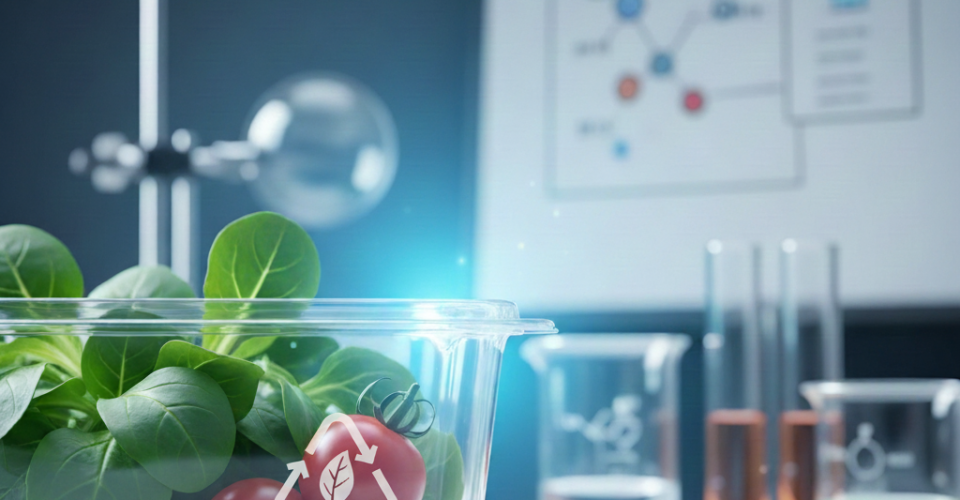
Polylactic Acid (PLA) is redefining the landscape of compostable packaging. Derived from renewable resources such as corn starch and sugarcane, it bridges the gap between plastic durability and environmental responsibility.
What Makes PLA Different
Unlike petroleum-based plastics, PLA decomposes into carbon dioxide and water in composting conditions within 90–180 days. It emits 68% fewer greenhouse gases during production compared to PET. In essence, it provides the clarity and rigidity of plastic, without the environmental guilt.
Strength Meets Sustainability
PLA excels in applications like cold beverage cups, salad bowls, straws, and film coatings. Its optical clarity makes it perfect for grab-and-go products where visibility matters.
- Temperature Range: Stable up to 110°F (best for cold applications).
- Odor & Taste Neutral: Won’t alter food flavor profiles.
- Renewable Origin: Made from annually renewable crops, not fossil fuels.
Industry Adoption
Brands like Pret A Manger and Sweetgreen have introduced PLA containers and utensils across stores, reducing their carbon footprint while maintaining brand presentation. According to the European Bioplastics Association, global PLA production is growing at 13% annually, driven by foodservice and retail packaging.
The Road Ahead
The biggest limitation? Composting access. Many municipalities lack industrial composting, but as infrastructure expands across the U.S. and Australia, PLA’s scalability will surge. Manufacturers are also improving heat-resistant PLA blends (PLA+PBAT) to extend its usability to warmer foods.
FAQs
Can PLA replace PET completely?
For cold and medium-heat applications, yes, though PET still dominates hot-food use.
Is PLA compostable at home?
It requires industrial composting to break down efficiently.
Does PLA have certification standards?
Yes, BPI and EN 13432 certifications confirm compostability.Q4: Can PLA be recycled?
Not through traditional recycling, it’s designed for composting streams.
Can PLA be recycled?
Not through traditional recycling, it’s designed for composting streams.
