
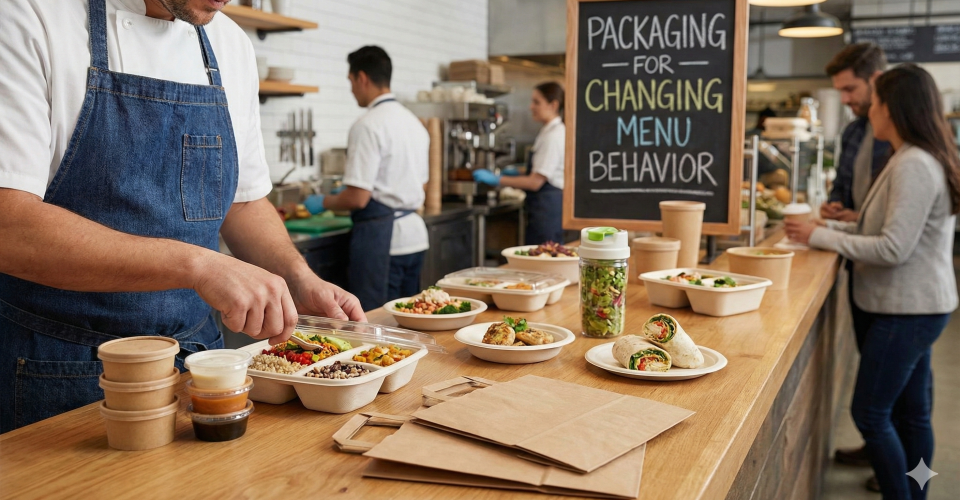
Smaller Plates, Shared Dishes, Custom Orders. Is Your Packaging Keeping Up?
Guest dining behavior has changed significantly over the past few years. Smaller plates, shared dishes, and customizable meals are now common across restaurants, hotels, and casual dining concepts. Guests want flexibility, variety, and the ability to mix items across menus. While menus have adapted quickly, packaging programs often lag behind.
Packaging that was designed around fixed portion sizes and single-use menu items can struggle to support these changes. The result is often wasted materials, mismatched containers, rushed substitutions during service, and inconsistent presentation for guests.
Operators who want to keep pace with evolving menus are rethinking how packaging supports both the kitchen and the guest experience.
Why Are Menus Becoming More Flexible?
Menus are changing because guest expectations have changed. Many diners now prefer smaller portions they can share, sample, or combine. Custom orders allow guests to choose sides, sauces, and proteins that fit their preferences. Off-premise dining has also increased demand for packaging that works across different meal formats.
These shifts create pressure on packaging programs that were built for static menus. A container designed for one entrée may not work for shared plates or custom builds. When packaging does not align with how food is ordered, operations feel the strain.
What Happens When Packaging Does Not Match the Menu?
When packaging is too rigid, teams are forced to improvise. Staff may double up containers, overpack small portions, or substitute items that do not fit properly. This slows down service and increases material use.
Inconsistent packaging also affects presentation. Guests receiving a mix of container styles or oversized packaging may question quality, even if the food itself is well prepared. Over time, these small issues add cost and complexity.
Packaging should support menu changes, not work against them.
How Can Packaging Support Multiple Portion Sizes?
One effective approach is selecting containers that perform well across a range of portion sizes. Containers with moderate depth and strong structure can hold small plates, shared items, or customized builds without needing separate SKUs for each use.
Flexible packaging allows teams to adjust portions without changing the container. This reduces the number of items stored in the back of house and simplifies ordering.
When fewer container types are needed, training becomes easier and service moves faster.
Why Should Operators Avoid Single Use Packaging Designs?
Packaging designed for only one menu item creates risk when menus change. Seasonal updates, limited-time offers, or portion adjustments often require new packaging that may not be readily available.
Single-use designs also increase storage demands and purchasing complexity. Each additional container type adds another item to track, reorder, and manage.
Choosing packaging that works across multiple menu uses provides flexibility and reduces dependence on last-minute changes.
How Do Neutral Designs Help With Rotating Menus?
As menus evolve, packaging design should remain consistent. Neutral colors and clean designs allow containers to work across different menu concepts without feeling out of place.
This approach supports brand consistency while allowing menus to change without reordering custom packaging. Neutral designs also reduce waste caused by outdated branding or seasonal graphics that no longer apply.
For operators with rotating menus or multiple service formats, neutral packaging offers long-term value.
Why Is Testing Packaging Against New Menus Important?
Packaging decisions should not be made in isolation. Testing containers with new menu concepts before launch helps identify issues early. This includes checking portion fit, stacking behavior, sealing performance, and presentation.
Testing allows teams to see how packaging performs under real service conditions. It also gives staff a chance to provide feedback before changes are rolled out systemwide.
Early testing reduces the risk of service disruptions once a menu goes live.
How Does Flexible Packaging Support Creativity Without Adding Complexity?
Menu creativity thrives when packaging does not impose limits. Flexible packaging gives chefs and operators room to experiment with portion sizes, shared dishes, and customizable builds.
At the same time, fewer packaging SKUs reduce complexity behind the scenes. Storage is simpler. Ordering is more predictable. Training is faster.
This balance allows operators to meet guest expectations without increasing operational burden.
Building a Packaging Program That Adapts With Your Menu
Packaging should evolve alongside menu strategy. Programs built around flexibility, consistency, and performance are better equipped to handle changing dining habits.
By choosing containers that work across portion sizes, avoiding overly specific designs, using neutral aesthetics, and testing early, hospitality teams can support menu changes with confidence.
Packaging becomes a tool that enables growth rather than a constraint.
Ready to Align Your Packaging With How Guests Order Today?
Direct Source Procurement works with hospitality teams to source flexible, reliable packaging that supports evolving menus without adding complexity. Our consultative approach helps operators choose solutions that perform across multiple uses while controlling costs and maintaining consistency.
Request a Custom Quote or Talk to a Packaging Specialist to review your current packaging program.
FAQs
What types of menus benefit most from flexible packaging?
Menus with shared plates, customizable options, seasonal rotations, or off-premise dining benefit the most from packaging that supports multiple portion sizes and formats.
Does flexible packaging cost more than single-use designs?
In many cases, flexible packaging reduces overall cost by lowering the number of SKUs, minimizing waste, and simplifying purchasing.
How many container types should a flexible packaging program include?
This depends on menu complexity, but many operators find that fewer well-chosen containers can replace several single-use options.
Should packaging be tested before a menu launch?
Yes. Testing helps identify fit, sealing, and presentation issues early and reduces service disruptions after launch.
Can flexible packaging still support sustainability goals?
Yes. Many fiber-based and recyclable containers are designed to perform across multiple uses while supporting sustainability and compliance requirements.
