
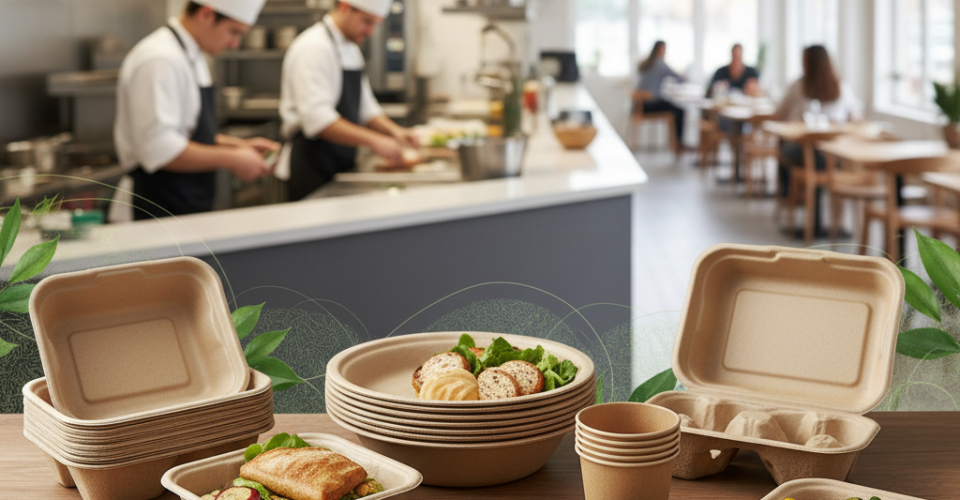
Molded fiber packaging has evolved from a simple pulp tray to one of the most advanced sustainable materials reshaping modern foodservice. Once used mainly for egg cartons, molded fiber is now a cornerstone for eco-friendly packaging, powering everything from takeout bowls to catering trays in restaurants, hotels, and institutional kitchens.
The Shift From Disposable to Durable Sustainability
The global foodservice packaging market is projected to reach $146 billion by 2030, and molded fiber is leading that transformation. Made from recycled paper, bamboo, or bagasse (sugarcane waste), it offers the strength of plastic with the environmental benefits of compostability.
Unlike polystyrene or PET, molded fiber breaks down within 90 days in industrial composting environments, meeting ASTM D6400 and BPI certification standards. For foodservice operators under pressure to meet ESG and zero-waste goals, that combination of performance and sustainability makes it ideal.
Why Foodservice Businesses Are Switching
Fast-casual chains, resorts, and hospitals are increasingly replacing foam or plastic with molded fiber for its versatility and consumer appeal. In an NC State study (2024), 78% of consumers said they associate molded fiber packaging with premium quality and eco responsibility.
- Heat & Moisture Resistance: Withstands temperatures up to 200°F, making it ideal for both hot and cold meals.
- Grease Control: Natural fibers and bio-coatings prevent leaks without PE plastic films.
- Custom Fit: New thermoforming techniques allow precise shapes and lid-locking designs.
Cost, Scale, and Brand Image
Five years ago, molded fiber was cost-prohibitive. Today, scale has changed that. With optimized manufacturing in Asia and North America, pricing is now competitive with coated paper or plastic alternatives, especially at volume. Plus, its tactile texture and natural tone communicate quality without added design expense.
The Future of Fiber
Molded fiber isn’t just a trend, it’s part of a systemic shift toward circular design. As composting infrastructure expands and plastic bans tighten, molded fiber will become the default for sustainable food packaging across the hospitality and QSR industries.
FAQs
Q1: What is molded fiber made of?
A: Recycled paper pulp, bamboo fiber, or agricultural byproducts like bagasse.
Q2: Can molded fiber be microwaved?
A: Yes, most molded fiber items are safe up to 200°F for short periods.
Q3: Is it water- and oil-resistant?
A: Yes, with natural coatings such as PLA or water-based barriers.
Q4: Is it recyclable?
A: It’s compostable rather than recyclable, designed for biological decomposition.
