
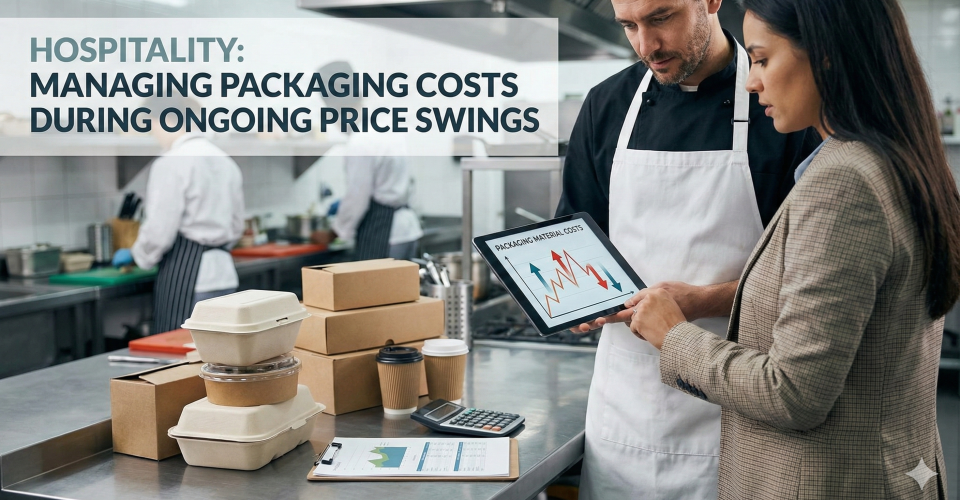
Hotels and restaurants across the country are dealing with fast and unpredictable changes in packaging costs. Resin prices continue to fluctuate, shipping rates shift without warning, and overseas production schedules are not always reliable. These changes make it difficult for operators to plan budgets, maintain stock levels, and keep service consistent for guests.
Many teams are now spending extra time checking prices, comparing materials, and adjusting orders. When packaging is not stable, it creates a ripple effect across prep stations, ordering routines, storage planning, and guest presentation. To keep operations steady during these shifts, more businesses are evaluating which packaging choices offer long term stability rather than short term savings.
Why Packaging Costs Keep Moving
Several factors are driving the price swings seen in late 2025:
- Increased demand for fiber and recyclable materials in states with new sustainability rules
- Higher freight rates on import lanes during peak seasons
- Shortages of certain plastics due to resin supply constraints
- Shifts in global production that affect lead times and order minimums
These variables make it hard for operators to predict month to month costs, especially when they rely on products tied to volatile material markets.
Practical Ways to Bring Stability Back to Daily Operations
While cost swings are difficult to control, the right sourcing strategy can reduce exposure to them. Operators who take a closer look at packaging lines, material types, and supplier relationships can keep more consistency across their service.
1. Choose packaging lines with stable long term pricing
Products made from fiber or recycled paper tend to be less sensitive to rapid supply swings. Standardizing SKUs within these material groups can help create a predictable spend each quarter.
2. Reduce exposure to fluctuating materials
Items that rely on specific plastic resins often see the biggest price jumps. Switching to fiber based containers or molded fiber cutlery can lower the impact of resin market changes while supporting sustainability goals.
3. Consolidate suppliers to simplify ordering
Working with fewer, more reliable suppliers reduces duplicate orders, miscommunication, and unexpected substitutions. It also makes it easier to track usage patterns and adjust inventory in advance.
4. Track usage to build a more accurate forecast
Teams that monitor order history and waste levels can adjust purchasing before prices spike. Even simple tracking helps managers spot which items are driving the most cost and where packaging changes could help.
How DSP Supports Cost Control
Direct Source Procurement helps operators build packaging programs that stay steady during market changes. Our team reviews current usage, identifies cost stable alternatives, and sources products through a vetted global network. With more reliable pricing and consistent lead times, hospitality teams can stay focused on service without the daily stress of price swings.
If you want to explore packaging options that bring more predictability to your operations, our team can walk you through a tailored plan for your menu and volume needs.
