
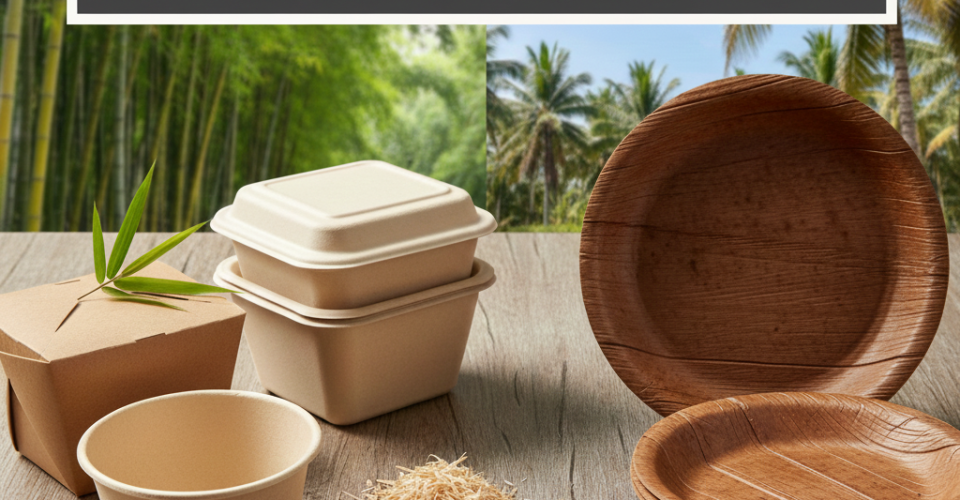
As foodservice brands look beyond plastics, two standout materials, bamboo and palm leaf, are redefining eco-friendly packaging. Each offers a distinct sustainability profile and visual identity.
Bamboo: The Renewable Powerhouse
Bamboo regenerates within 3–5 years without replanting or pesticides, making it one of the most renewable natural resources. Bamboo packaging is lightweight yet durable, ideal for cutlery, containers, and drinkware.
- Consistent quality for high-volume food chains.
- Compostable and FDA-approved for food contact.
- Aesthetically clean, aligning with minimalist brand design.
Palm Leaf: Nature’s Signature Touch
Palm leaf plates are crafted from naturally fallen leaves collected from areca palm trees, no trees are harmed. The leaves are washed, heat-pressed, and sterilized to create sturdy, fully biodegradable plates and trays.
Each piece is unique in texture and color, making palm leaf packaging a favorite for boutique restaurants, resorts, and events.
Which Material Fits Your Business?
- For scalability: Bamboo offers consistency and global availability.
- For presentation: Palm leaf delivers a rustic, premium look.
- For cost efficiency: Bamboo often provides better long-term pricing stability.
According to the Allied Market Research 2024 report, bamboo packaging demand is expected to rise by 6.5% CAGR, driven by both QSR and hospitality adoption.
FAQs
Q1: Are palm leaf products heat-resistant?
A: Yes, they handle hot and oily foods well without leakage.
Q2: Can bamboo be reused?
A: Some bamboo items (like cutlery) can be lightly reused before composting.Q3: Which is better for branding?
A: Bamboo for uniformity; palm leaf for texture and natural variation.
Q3: Which is better for branding?
A: Bamboo for uniformity; palm leaf for texture and natural variation.
