In B2B procurement, packaging is no longer evaluated solely on cost, quality, or lead time. Today, enterprise buyers are asking a deeper question: Where does this packaging actually come from, and can you prove it?
Traceable, transparent packaging sources have become a baseline expectation across industries, from foodservice and retail to cosmetics and consumer goods. This shift isn’t driven by trend or branding alone. It’s the result of increased regulatory scrutiny, ESG accountability, supply chain risk, and reputational pressure.
For suppliers and brands alike, transparency is no longer a “nice to have.” It’s a prerequisite for doing business.
What Does Traceable, Transparent Packaging Really Mean?
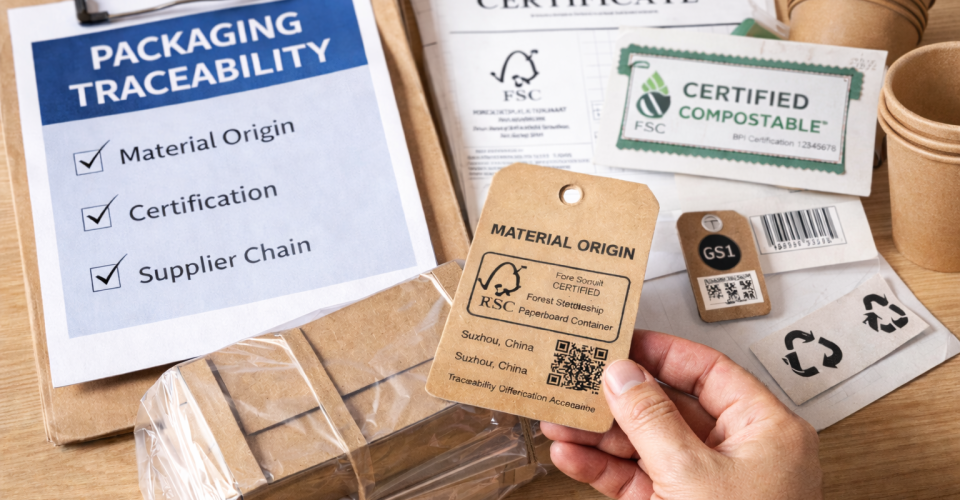
Traceable packaging sources allow buyers to clearly identify:
- Where raw materials originate
- How and where packaging is manufactured
- Which suppliers and facilities are involved
- What certifications and standards apply
- How materials move through the supply chain
Transparency means this information is documented, verifiable, and accessible, not buried in marketing claims or vague assurances.
For B2B clients, traceability is about risk management and accountability, not just sustainability storytelling.
The Key Drivers Behind the Demand for Traceability
1. Regulatory and Compliance Pressure
Governments and regulatory bodies are tightening requirements around:
- Material sourcing
- Environmental claims
- Food contact safety
- Waste and emissions reporting
B2B buyers are increasingly responsible for proving compliance across their entire supply chain, not just within their own operations. If a packaging supplier can’t provide clear documentation, it becomes a liability.
Traceable packaging sources reduce audit risk and simplify compliance reporting.
2. ESG Reporting and Investor Scrutiny
Environmental, Social, and Governance (ESG) commitments are now closely examined by investors, boards, and customers.
Packaging impacts multiple ESG metrics, including:
- Carbon footprint
- Waste diversion
- Ethical sourcing
- Supplier governance
Without traceability, ESG reporting becomes speculative at best, and misleading at worst. Transparent sourcing allows B2B clients to back up claims with evidence, protecting both credibility and valuation.
3. Supply Chain Resilience and Risk Management
Recent global disruptions exposed how fragile opaque supply chains can be. B2B buyers now prioritize:
- Visibility into supplier networks
- Redundancy planning
- Predictable lead times
- Contingency sourcing options
Traceable packaging sources give procurement teams confidence that suppliers understand, and can manage their upstream dependencies.
4. Heightened Greenwashing Concerns
As sustainability claims increase, so does skepticism.
B2B buyers are actively working to avoid:
- Unverified “eco” claims
- Misleading certifications
- Materials that don’t match stated performance
Transparent packaging sources help buyers differentiate between genuine sustainability efforts and surface-level marketing, protecting brand reputation.
What B2B Clients Expect From Packaging Suppliers Today
The bar for packaging suppliers has risen. Increasingly, B2B clients expect:
Clear Supplier Disclosure
Who manufactures the packaging? Where? Under what standards?
Material Traceability
Is the fiber recycled? Post-consumer or post-industrial? Is the resin certified? Is compostability verified?
Certification Documentation
Third-party certifications that are current, relevant, and applicable to the exact product, not generic claims.
Consistency Across Orders
The ability to maintain the same specifications, materials, and sourcing over time and across locations.
Suppliers that can’t provide this level of clarity often lose out, even if their pricing is competitive.
Transparency as a Trust Signal
In B2B relationships, trust is built through predictability and proof.
Transparent packaging sourcing signals that a supplier:
- Understands regulatory and ESG realities
- Operates with accountability
- Is prepared for audits and scrutiny
- Treats sustainability as a system, not a slogan
For procurement teams, this reduces internal friction, speeds approvals, and strengthens long-term partnerships.
How Traceability Impacts Procurement Decisions
From a procurement perspective, traceable packaging sources enable:
- Faster supplier vetting
- Easier internal stakeholder alignment
- Reduced legal and compliance risk
- More confident sustainability reporting
Over time, this leads to lower total cost of ownership, even if unit pricing is slightly higher.
The Operational Reality: Transparency Must Be Built In
True traceability isn’t something that can be retrofitted at the last minute. It requires:
- Structured supplier networks
- Documentation processes
- Ongoing audits and updates
- Clear internal ownership
Packaging partners that invest in transparency upfront are better positioned to scale with B2B clients as requirements evolve.
The Future of B2B Packaging Sourcing
Looking ahead, traceability will only become more critical.
Emerging expectations include:
- Digital traceability systems
- More granular material disclosures
- Region-specific compliance mapping
- Tighter alignment between packaging, logistics, and waste outcomes
In this environment, opaque sourcing isn’t just risky, it’s uncompetitive.
If your organization is evaluating packaging suppliers or strengthening its sustainability and compliance programs, Direct Source Procurement can help you source packaging with full transparency, traceability, and documentation.
Book a free packaging consultation to review sourcing models, certifications, and risk-reduction strategies tailored to your business.
FAQs
1. What is a traceable packaging source?
A traceable packaging source provides clear documentation of material origin, manufacturing location, certifications, and supplier chain.
2. Why is traceability important for B2B clients?
It reduces compliance risk, supports ESG reporting, and protects brand reputation.
3. Does traceable packaging cost more?
Not always. While unit costs may vary, traceability often lowers long-term risk and operational costs.
4. How can buyers verify packaging transparency?
By requesting third-party certifications, supplier disclosures, and consistent documentation across orders.
5. Is transparency only about sustainability?
No. It also impacts supply continuity, quality control, compliance, and overall procurement confidence.
