
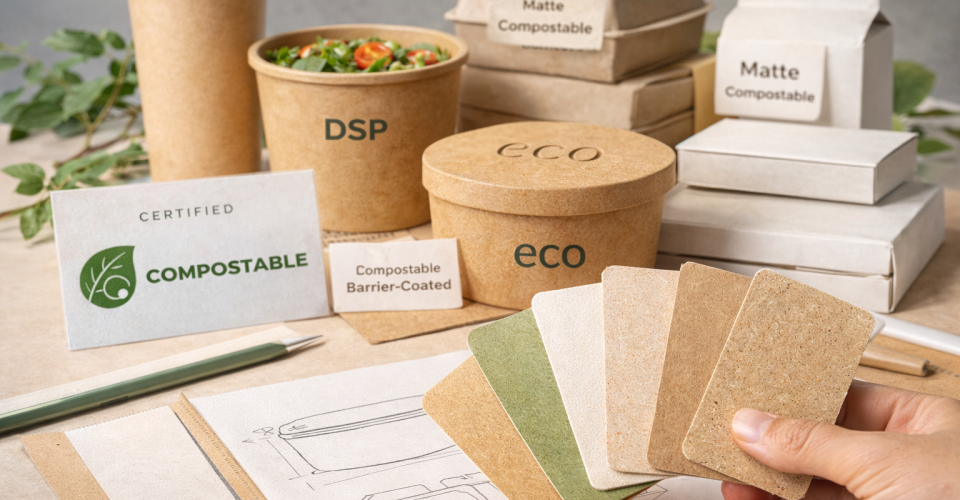
As compostable packaging adoption grows, brands are discovering that sustainability isn’t just about materials, it’s also about finishes and textures. The surface treatment of compostable packaging plays a critical role in functionality, customer perception, compliance, and end-of-life performance.
Choosing the wrong finish can undermine compostability, increase costs, or raise greenwashing concerns. Choosing the right one, however, allows brands to protect products, communicate values clearly, and maintain operational efficiency at scale.
This guide explains how to select finishes and textures for compostable packaging that balance performance, aesthetics, and sustainability, without sacrificing credibility.
Why Finishes and Textures Matter in Compostable Packaging
Finishes and textures influence how packaging:
- Feels in the customer’s hands
- Performs under heat, moisture, and handling
- Is sorted, composted, or recycled
- Is perceived by procurement teams and auditors
In compostable packaging, finishes are not purely decorative. They directly affect biodegradability, compostability certification, and real-world disposal outcomes.
Start With the End in Mind: Compostability First
Before selecting any finish or texture, brands must understand how the package is intended to break down.
Key questions to answer upfront:
- Is the packaging certified compostable (industrial or home)?
- What composting standards apply (ASTM D6400, EN 13432, etc.)?
- Will the packaging likely enter foodservice compost streams or municipal systems?
Some finishes that look sustainable can interfere with composting processes or invalidate certifications if not approved.
Rule of thumb: If a finish adds complexity without functional benefit, it’s often the wrong choice for compostable packaging.
Common Finishes Used in Compostable Packaging, and When to Use Them
1. Uncoated or Lightly Treated Surfaces
Uncoated finishes are the most compost-friendly option.
Best for:
- Dry foods
- Short use cycles
- Brands prioritizing material honesty and transparency
Benefits:
- High compostability compatibility
- Lower processing impact
- Clear sustainability signaling
Trade-off: Limited resistance to moisture and grease.
2. Compostable Barrier Coatings
When food protection is required, compostable coatings can add functionality without compromising end-of-life outcomes.
Best for:
- Hot foods
- Greasy or moist items
- Takeout and delivery
Benefits:
- Improves performance and durability
- Maintains compostability when certified
- Supports food safety and quality
Key consideration: Always verify that coatings are certified compostable, not simply “plant-based” or “bio-derived.”
3. Matte Finishes for Compostable Packaging
Matte textures are increasingly favored in sustainable design.
Why they work:
- Reduce the need for additional coatings
- Improve recyclability and compostability outcomes
- Communicate authenticity and minimal processing
Matte finishes also photograph well and align with modern, minimalist branding.
4. Embossed and Debossed Textures
Texture can replace ink-heavy branding.
Best for:
- Logos
- Structural differentiation
- Tactile brand recognition
Benefits:
- No added inks or coatings
- Strong sustainability signaling
- Premium feel without additional materials
Embossing is one of the most sustainability-aligned branding techniques for compostable packaging.
Finishes to Approach With Caution
Certain finishes commonly used in conventional packaging can conflict with compostable goals.
High-Gloss Coatings
Glossy finishes often rely on synthetic coatings that:
- Interfere with composting
- Reduce material breathability
- Increase skepticism around sustainability claims
Unless explicitly certified compostable, gloss should be avoided.
Heavy Inks and Full-Coverage Printing
Excessive ink coverage can:
- Slow composting processes
- Introduce contaminants
- Increase environmental impact
Minimal, targeted printing is usually more compatible with compostable systems.
How Texture Influences Sustainability Perception
Texture plays a subtle but powerful role in how compostable packaging is perceived.
- Natural textures signal authenticity and trust
- Overly smooth or plastic-like surfaces raise skepticism
- Visible fiber or grain reinforces compostability cues
In B2B and foodservice contexts, tactile cues often matter as much as visual ones.
Balancing Functionality, Aesthetics, and Compliance
The most successful compostable packaging programs align three priorities:
- Performance: Does it protect the product under real conditions?
- Sustainability: Does it maintain certified compostability?
- Scalability: Can it be produced consistently at volume?
Testing finishes in real service environments, not just lab conditions is critical. What works for a pilot may fail at scale if finishes degrade, peel, or compromise performance.
Procurement Considerations for Finishes and Textures
From a procurement perspective, finishes should support:
- Supply continuity
- Predictable lead times
- Consistent specifications across reorders
- Clear documentation for audits and ESG reporting
Simpler finishes typically reduce risk and total cost of ownership.
Designing for Long-Term Impact
As regulations tighten and sustainability claims face greater scrutiny, compostable packaging design is shifting toward restraint and transparency.
The most credible solutions:
- Use finishes only when they add real value
- Favor texture over coatings
- Align design choices with certified materials
- Communicate sustainability through structure, not embellishment
In compostable packaging, less truly is more.
If you’re evaluating compostable packaging or refining an existing program, Direct Source Procurement can help you select finishes and textures that balance performance, compliance, and sustainability at scale.
Book a free packaging consultation to review materials, certifications, and design options tailored to your operation.
FAQs
1. Are glossy finishes ever suitable for compostable packaging?
Only if they are certified compostable. Many glossy finishes are not compatible with composting systems.
2. Do finishes affect compostability certifications?
Yes. Non-approved coatings or inks can invalidate compostability certifications.
3. What finish is best for greasy or hot foods?
Certified compostable barrier coatings are typically required to maintain performance.
4. Can texture replace printed branding?
In many cases, yes. Embossing or debossing can reduce ink use while strengthening brand identity.
5. How do I verify a finish is truly compostable?
Request third-party certifications and documentation from suppliers, not just marketing claims.
