
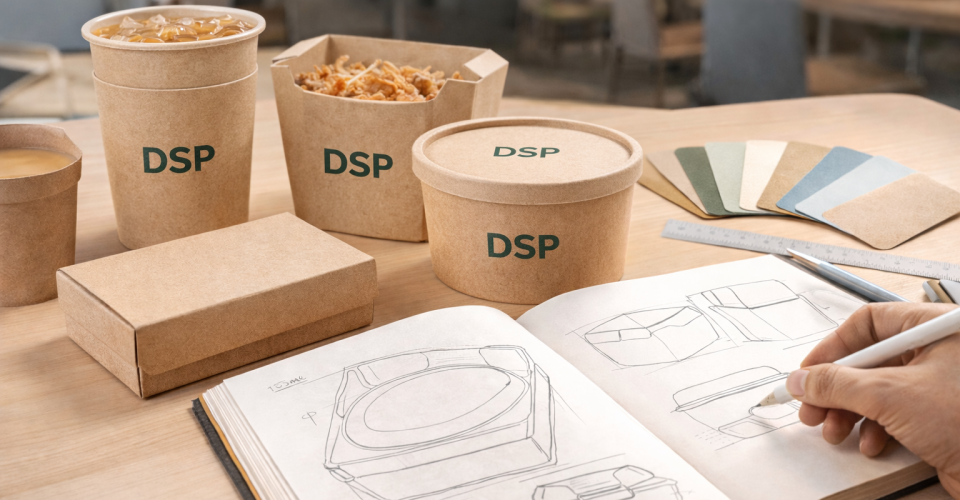
In custom foodware design, aesthetics often get the spotlight, but functionality is what determines long-term success. For restaurants, QSRs, caterers, and hospitality brands, foodware must do more than look good. It needs to perform reliably at scale, protect food quality, meet regulatory standards, and support sustainability goals, all while reinforcing brand identity.
The most effective custom foodware designs don’t force a trade-off between form and function. Instead, they integrate both, creating packaging and serviceware that is operationally efficient, visually cohesive, and procurement-friendly.
This article explores how brands can strike that balance, and why it matters more than ever in modern foodservice.
Why Balancing Function and Aesthetics Matters in Foodware
Foodware sits at the intersection of operations, brand experience, and compliance. Unlike purely decorative packaging, it must perform under real-world conditions: heat, moisture, transport, stacking, and high-volume use.
When functionality is overlooked:
- Food quality suffers (leaks, sogginess, temperature loss)
- Operational inefficiencies increase
- Costs rise due to waste or reorders
- Brand trust erodes through poor customer experience
When aesthetics are ignored:
- Brand differentiation weakens
- Sustainability messaging gets lost
- Customer perception feels generic or low-effort
The goal of custom foodware design is not compromise, it’s alignment.
Functionality: The Non-Negotiable Foundation
Before colors, logos, or finishes are considered, custom foodware must meet core functional requirements.
1. Food Protection and Performance
Effective foodware maintains structural integrity across its intended use:
- Heat resistance for hot foods
- Moisture and grease resistance
- Secure closures for delivery and takeout
- Stackability for storage and transport
Design choices should be informed by actual use cases, not ideal scenarios.
2. Operational Efficiency
In high-volume foodservice environments, small inefficiencies scale quickly. Functional design supports:
- Fast assembly and filling
- Consistent portion control
- Reduced prep time
- Compatibility with existing equipment
Foodware that slows down service or complicates workflows ultimately increases labor and waste costs.
3. Compliance and Safety
Foodware must meet regulatory requirements for food contact, labeling, and material safety. Designs should also support:
- Clear allergen or disposal labeling
- Consistent specifications across reorders
- Documented material sourcing for audits
Functionality includes regulatory readiness, especially for multi-location brands.
Aesthetics: More Than Visual Appeal
Aesthetics in custom foodware are not about decoration, they’re about communication.
1. Reinforcing Brand Identity
Custom foodware is often the most frequent physical touchpoint between a brand and its customers. Design elements such as:
- Color palette
- Typography
- Minimal or bold branding
- Material texture
All contribute to how the brand is perceived, whether premium, approachable, eco-conscious, or operationally focused.
2. Supporting Sustainability Messaging
Modern aesthetics often favor:
- Earth tones and neutral palettes
- Minimalist layouts
- Visible material textures
These choices help reinforce sustainability values without overstatement, especially when paired with verified materials and certifications.
3. Enhancing Customer Experience
Well-designed foodware elevates the eating experience. It signals care, consistency, and professionalism—qualities that influence repeat business and brand loyalty.
Where Brands Often Get the Balance Wrong
Common mistakes in custom foodware design include:
- Prioritizing visual design that compromises performance (e.g., thin walls that collapse)
- Over-branding that interferes with recyclability or compostability
- Choosing materials for appearance rather than food compatibility
- Ignoring scalability and reorder consistency
These missteps often stem from designing in silos rather than considering the full lifecycle of the foodware.
How to Balance Functionality and Aesthetics Effectively
The most successful custom foodware programs follow a structured, cross-functional approach.
1. Design from the Use Case Backward
Start with real-world conditions: menu type, temperature, delivery distance, storage constraints, and service speed. Let these factors guide material and structural decisions first.
2. Let Materials Inform Design
Sustainable materials have distinct textures, colors, and limitations. Instead of forcing a look, allow the material’s natural qualities to shape the aesthetic.
This approach often results in more authentic, and more trusted, designs.
3. Simplify Where Possible
Minimalist designs often perform better operationally and environmentally:
- Fewer components
- Fewer inks or coatings
- Standardized sizes
Simplicity reduces failure points while creating a clean, modern look.
4. Test at Scale
What works in a mockup may fail in a live environment. Testing foodware in real service conditions helps validate both performance and appearance before full rollout
The Procurement Perspective
From a procurement standpoint, balanced foodware design delivers:
- Predictable costs
- Reliable supply continuity
- Easier supplier coordination
- Fewer quality issues over time
Designs that prioritize both function and aesthetics reduce total cost of ownership—not just unit price.
Looking Ahead: The Future of Custom Foodware Design
As foodservice evolves, custom foodware will increasingly need to:
- Support sustainability reporting
- Adapt to changing regulations
- Perform across dine-in, takeout, and delivery
- Maintain brand consistency across locations
Balancing functionality and aesthetics is no longer a design preference, it’s a strategic requirement.
If you’re evaluating or redesigning your custom foodware program, Direct Source Procurement can help you align performance, design, sustainability, and cost at scale.
Book a free foodware consultation to assess materials, functionality, and branding opportunities tailored to your operation.
FAQs
1. What is the most important factor in custom foodware design?
Functionality comes first, food protection, safety, and operational efficiency are essential before aesthetic decisions.
2. Can sustainable foodware still look premium?
Yes. Thoughtful material selection and minimalist design often enhance perceived quality while supporting sustainability goals.
3. How does foodware design affect operational costs?
Poor design increases waste, slows service, and drives reorders. Well-designed foodware improves efficiency and reduces long-term costs.
4. Should branding be bold or subtle on foodware?
That depends on brand strategy, but subtle, intentional branding often performs better in high-volume foodservice environments.
5. How do I ensure consistency across multiple locations?
Standardized specifications, scalable materials, and reliable sourcing partners are key to maintaining consistency at scale.
