Compostable packaging has become a symbol of progress in foodservice sustainability but in the real world, it often falls short when used on its own.
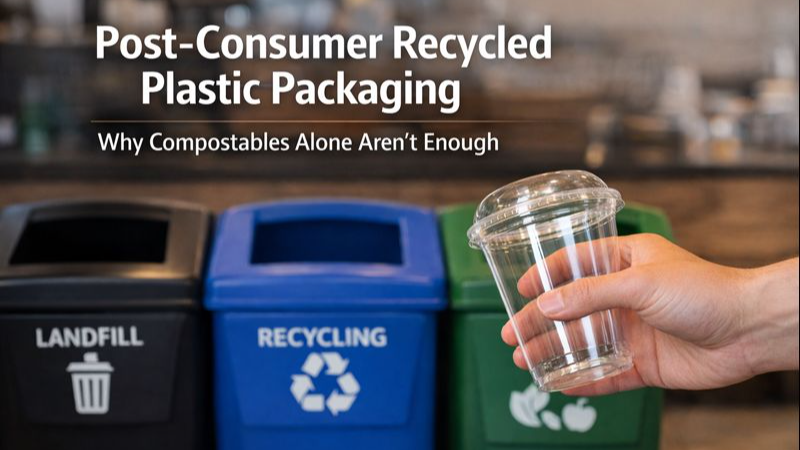
Picture a common moment: a guest stands in front of three bins, landfill, recycling, compost, holding a compostable cup that looks just like plastic. The labeling is unclear. The signage doesn’t quite match. After a brief pause, they make a guess and move on.
That moment of confusion is happening thousands of times a day. And it highlights a hard truth many brands are beginning to acknowledge: materials only work when the systems around them work too.
The Infrastructure Gap
Compostables can be powerful in the right environments, but they depend heavily on access to commercial composting, clear bin design, trained staff, and supportive haulers. In many cities, those conditions simply don’t exist at scale. The result? High contamination, missed recovery, and sustainability goals that are harder to reach than expected.
This doesn’t mean compostables are the wrong choice, it means they’re one tool, not the entire solution.
Where PCR Fits In
Post-consumer recycled (PCR) plastic packaging offers a practical complement. Made from materials that have already been used and recovered, PCR helps reduce reliance on virgin plastic while working within existing recycling systems that are often more established than composting.
For many foodservice and hospitality brands, PCR has become a bridge, supporting clarity, durability, and recovery in formats like cold cups, lids, and rigid containers, especially in markets with stronger recycling infrastructure.
Moving Beyond “Either / Or”
The most effective packaging strategies today aren’t ideological. They’re layered and realistic:
- Compostables where systems truly support them
- PCR where recycling works better than composting
- Reusables where operations allow
- Clear communication so guests know what to do
The goal isn’t perfection, it’s fit.
Start With One Item
Sustainable progress doesn’t require solving everything at once. Start with one high-volume item you can influence. Make the next decision clearer for the people who use it. Then build from there.
Read the full newsletter here → LinkedIn Newsletter to explore where compostables struggle, why PCR is accelerating globally, and how leading brands are building packaging strategies that work today, while preparing for better systems tomorrow.
Partnering for Progress
At Direct Source Procurement, we help brands navigate compostables, PCR, and reusables with both performance and perception in mind.
