
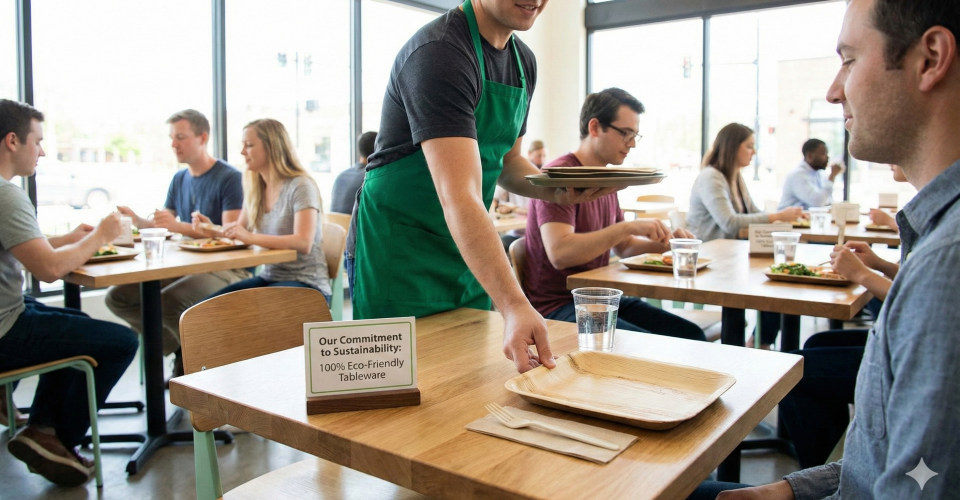
Sustainability has moved from being a discussion topic to an expectation in hotels, resorts, and event venues. Eco-friendly tableware not only reduces environmental impact but also enhances guest experience and supports operational efficiency. For hospitality brands, the adoption of compostable, reusable, or biodegradable tableware is becoming a standard practice that reflects both credibility and care for guests.
How Does Eco-Friendly Tableware Meet Guest Expectations?
Modern travelers are increasingly aware of environmental issues and associate sustainable practices with high-quality service. Guests often notice whether a property uses compostable or reusable tableware, and this perception influences their overall satisfaction.
Surveys indicate that properties offering sustainable dining options receive satisfaction ratings up to 15 percent higher. Visible eco choices signal attention to detail, operational responsibility, and commitment to environmental stewardship. For hotels and resorts competing on experience, these subtle cues strengthen trust and brand reputation.
Can Eco-Friendly Tableware Withstand High-Volume Service?
Durability and performance are key for hospitality settings, where tableware must handle buffets, room service, and event catering. Modern molded-fiber, bamboo, and palm-leaf options are lightweight yet strong, resisting breakage under heat lamps, stacked trays, or covered service.
High-quality compostable items also reduce disposal fees associated with single-use plastics. For large-scale operations, uniform performance across plate, cup, and cutlery sets ensures consistency while maintaining environmental credibility.
How Does Tableware Support Brand Identity?
Tableware is a subtle but powerful medium for storytelling. Properties emphasizing wellness, sustainability, or local sourcing can reinforce their brand values visually through eco-friendly materials. Natural tones, textures, and biodegradable finishes complement upscale interiors more effectively than standard foam or plastic alternatives.
Consistent eco-friendly design across plates, cups, and utensils also reinforces the brand’s commitment to environmental responsibility. Guests notice and remember these details, which can increase loyalty and positive word-of-mouth.
What Operational Benefits Do Uniform Eco Lines Offer?
Standardizing eco-friendly tableware simplifies purchasing, storage, and logistics. Vendors often supply complete sets—plates, cups, and cutlery—that nest efficiently, reducing warehouse footprint by 20 to 25 percent.
Uniform lines also streamline training for staff, minimize errors during service, and simplify inventory management. Properties benefit from fewer SKUs, lower breakage rates, and predictable procurement, all of which reduce operational costs while supporting sustainability goals.
How Can Hotels Communicate Sustainability to Guests?
Visible, yet subtle communication strengthens the impact of eco-friendly tableware. Options include:
- On-table signage noting compostable or biodegradable materials.
- Menu icons highlighting sustainable items.
- Staff guidance on explaining eco choices during service.
Transparent communication enhances credibility and ensures guests understand the environmental benefits without needing excessive explanation. This approach improves guest experience while reinforcing the property’s sustainability narrative.
Taking Action: Implementing Eco-Friendly Tableware
Hospitality brands looking to adopt eco-friendly tableware should start by auditing current service items. Identify areas where disposable plastic or foam is used and replace them with molded-fiber, bamboo, or compostable options.
Ensure that products meet durability standards for high-volume service and match the property’s brand aesthetics. Work with vendors who provide uniform, nestable sets to simplify storage and procurement. Educate staff on proper handling, usage, and disposal to maximize operational efficiency and minimize waste.
Implementing these changes provides tangible guest experience benefits, strengthens brand positioning, and contributes to measurable sustainability goals.
FAQs
Q1: Are compostable items suitable for large banquets and events?
Yes. Molded-fiber or palm-leaf plates, cups, and utensils hold up well under high-volume service.
Q2: Can eco-friendly tableware hold liquids or sauces?
Yes. Modern coatings allow containers to resist seepage for hours.
Q3: Can premium properties justify the switch?
Absolutely. Guests increasingly expect sustainable options, and the brand equity gained outweighs marginal costs.
Q4: How can hotels communicate sustainability effectively?
Discreet on-table signage, menu icons, or staff explanations help guests understand the eco benefits of the tableware.
Q5: Do eco-friendly materials impact operational efficiency?
Yes. Uniform, nestable products simplify storage, reduce breakage, and streamline service processes.
