For large restaurant groups and hospitality operators, packaging consistency is as important as recipe consistency. A customer ordering the same sandwich in Los Angeles, Dallas, or Miami expects it to look, feel, and function identically. Standardized packaging supports this expectation, protecting product quality, simplifying logistics, and reinforcing brand identity across every location.
Consistency is more than a visual cue—it impacts operations, cost efficiency, and customer perception.
Why Is Consistency Important for Growth?
Uniform packaging reduces complexity across multiple operational areas:
- Procurement: Ordering the same certified compostable cups, bowls, or trays in bulk improves pricing and simplifies inventory management.
- Training: Staff across locations can quickly learn handling, assembly, and disposal procedures.
- Waste Management: Standardized materials streamline recycling or composting programs, lowering disposal costs and reducing regulatory risk.
Inconsistent packaging can lead to mismatched portions, brand confusion, and unnecessary waste. Chain operators report up to 12 percent cost savings after standardizing packaging SKUs, demonstrating the tangible benefits of consistency.
What Should a Packaging Playbook Include?
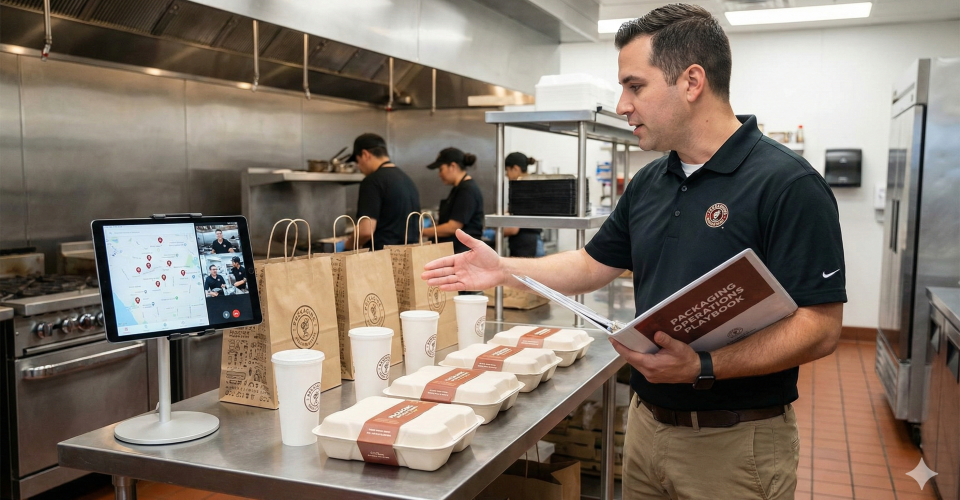
A comprehensive playbook acts as a central reference for operations, supply chain, and marketing teams. Key elements include:
- Approved Materials: Specify suitable substrates, such as bagasse for hot foods and PLA for cold items.
- Compliance Standards: Include FDA food-contact requirements, BPI certification, and local composting regulations.
- Visual Identity Rules: Define color schemes, logo placement, and labeling requirements.
- Performance Testing Protocols: Outline how packaging should perform under heat, moisture, and delivery stress.
Digital playbooks allow teams and suppliers to access current specifications instantly, preventing costly errors in production or printing. By documenting standards clearly, brands maintain quality and compliance while supporting rapid onboarding of new locations.
How Can Brands Balance Flexibility With Control?
Regional variations in climate, menu offerings, or supplier availability may require alternate SKUs. The solution is a tiered standard system:
- Core Items: Identical nationwide, ensuring brand cohesion.
- Regional Substitutes: Pre-approved alternatives that meet sustainability, performance, and visual standards.
This approach maintains operational control and sustainability goals while accommodating local realities. It ensures that branding, product protection, and eco-certifications remain consistent across all locations.
What Are the Bottom-Line Benefits of a Unified Packaging Playbook?
A centralized packaging system delivers multiple operational advantages:
- Speed: Simplifies ordering, reduces errors, and accelerates new store onboarding.
- Savings: Bulk ordering, reduced waste, and simplified inventory lower operational costs.
- Brand Cohesion: Consistent visuals and functionality reinforce customer trust and satisfaction.
By turning packaging into a measurable system rather than a marketing statement, foodservice brands can combine sustainability, efficiency, and brand consistency into one operational framework.
For multi-location restaurant or hospitality brands, developing a packaging playbook is a practical step toward operational excellence. Document approved materials, performance standards, and visual identity rules to ensure consistency across locations. Partner with suppliers who can provide certified eco-friendly materials and clear compliance documentation.
Implementing a unified playbook today strengthens brand perception, reduces operational inefficiencies, and supports sustainability goals across every location.
FAQs
Q1: Which departments should manage the playbook?
Operations, supply chain, and marketing should collaborate to maintain accuracy and alignment.
Q2: How often should the playbook be updated?
Update every six months or whenever packaging materials or standards change.
Q3: Does standardization limit creative packaging design?
No. Templates can allow seasonal or regional artwork within defined parameters.
Q4: What KPIs demonstrate success?
Track lower SKU counts, reduced waste, faster onboarding, and consistent customer satisfaction scores.
Q5: Can a playbook improve sustainability outcomes?
Yes. Standardized, certified eco-friendly packaging reduces waste, ensures compliance, and strengthens environmental accountability across all locations.
