Recycled paperboard plays a central role in reducing packaging waste and lowering environmental impact. It is not simply paper reused for another cycle. It is a material system designed to keep resources in use, reduce landfill pressure, and limit dependence on virgin raw materials. As regulations tighten and brands face growing pressure to show measurable progress, recycled paperboard has become one of the most practical packaging options available.
This shift is driven by results. Recycled paperboard delivers consistent performance, stable supply, and compatibility with existing packaging operations, making it easier for brands to move toward circular packaging without operational disruption.
How Does Recycled Paperboard Reduce Packaging Waste?
Paperboard recycling addresses two major waste challenges at the same time. It diverts large volumes of material from landfills and reduces the need for new fiber extraction.
According to data published by the U.S. Environmental Protection Agency in 2024, every ton of recycled paperboard saves up to three cubic yards of landfill space and uses about sixty percent less energy than producing paperboard from virgin fiber. Water use is also reduced, and overall emissions across the production cycle are lower.
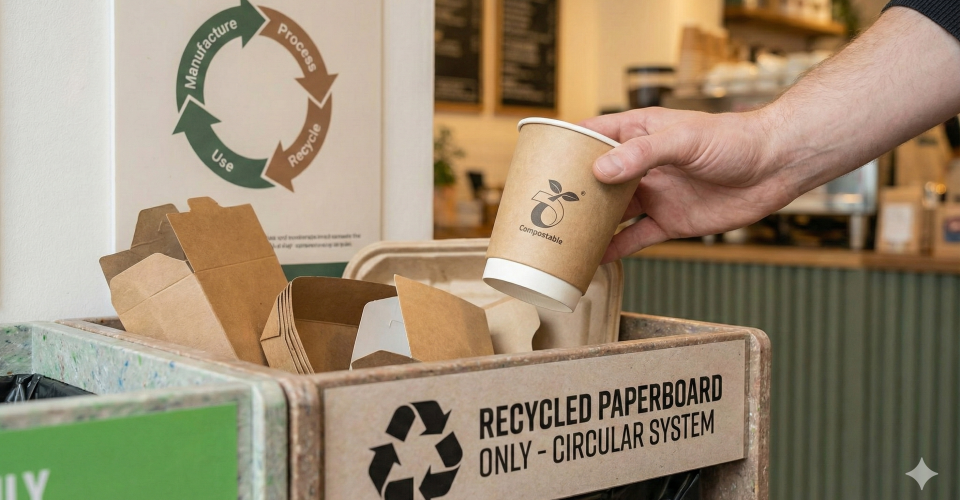
In foodservice and retail settings, recycled paperboard is widely used for beverage sleeves, cup carriers, folding cartons, trays, and takeaway boxes. These applications demand strength, consistency, and reliability. Recycled paperboard meets these requirements while helping brands reduce waste generation.
One of the key advantages is continuity. Brands can integrate recycled content into existing packaging formats without changing equipment, logistics, or handling processes.
What Materials Are Used to Make Recycled Paperboard?
Recycled paperboard is produced using two main fiber sources.
Post consumer waste includes used cartons, boxes, and paper packaging collected through municipal and commercial recycling programs.
Post industrial waste includes clean production scraps and trimmings generated during manufacturing processes.
These fibers are sorted, cleaned, and processed through pulping systems that remove inks, adhesives, and contaminants. The cleaned fibers are then reformed into sheets with controlled thickness, strength, and surface quality.
Advancements in fiber recovery have significantly improved material consistency. As a result, recycled paperboard can now be produced in grades suitable for a wide range of uses, including food contact applications when manufactured under approved conditions.
How Has Recycled Paperboard Manufacturing Improved?
Earlier recycled paperboard products often suffered from uneven texture, limited strength, and inconsistent appearance. This has changed due to improvements in pulping, screening, and fiber blending technologies.
Modern mills can fine tune fiber composition to balance durability, rigidity, and print performance. This allows recycled paperboard to perform reliably in demanding applications such as foodservice packaging and retail displays.
Manufacturers can also apply functional treatments during production. These include water based coatings for moisture resistance and compostable barrier layers made from plant derived materials. These treatments reduce reliance on plastic linings while maintaining usability.
The result is a material that performs well during use and remains compatible with recycling or composting systems when designed correctly.
How Does Recycled Paperboard Perform in Packaging Applications?
Recycled paperboard offers strong structural performance alongside design flexibility.
Thickness and density can be adjusted to support stacking, carrying weight, and impact resistance. This makes it suitable for both lightweight retail packaging and heavier foodservice formats.
Surface quality has improved enough to support high quality printing with soy based or water based inks. This allows clear branding, readable labeling, and consistent color output.
Design options include matte finishes, natural textures, and kraft appearances that align with transparent and minimal brand presentation. Embossing, debossing, and die cutting are also widely used without affecting performance.
For brands aiming to reduce plastic use, recycled paperboard works well with compostable or water based coatings that add moisture resistance while preserving end of life options.
What Are the Environmental and Cost Benefits?
Using recycled paperboard reduces dependence on virgin pulp markets, which are often affected by global demand, forestry limitations, and transportation costs. Recycled fiber supply is generally more stable in regions with established recycling infrastructure.
From a cost perspective, recycled paperboard can lower raw material expenses over time, particularly at scale. While pricing varies by grade and region, cost predictability is often better than virgin fiber alternatives.
Market data published by Statista in 2025 shows recycled fiber packaging growing at an annual rate of about eight percent. This growth is driven by regulatory requirements, procurement standards, and consumer expectations around waste reduction.
For foodservice and retail brands, recycled paperboard provides a practical way to meet sustainability goals with measurable outcomes.
How Does Recycled Paperboard Support Circular Packaging Systems?
Circular packaging focuses on keeping materials in use for as long as possible. Recycled paperboard fits this model because paper fibers can be reused multiple times before losing strength.
Most paper fibers can be recycled five to seven times. Each cycle extracts additional value from the same resource before it eventually exits the system through composting or disposal.
As recycling infrastructure expands and extended producer responsibility policies become more common, recycled paperboard will continue to play a central role in circular packaging strategies.
If your brand is evaluating packaging materials that reduce waste, meet regulatory expectations, and fit into existing operations, recycled paperboard is a proven option. Review your current packaging mix, assess recycled content opportunities, and work with suppliers who can provide clear sourcing and certification details. Moving toward circular packaging starts with material choices that deliver both performance and accountability.
FAQs
Q1: Can recycled paperboard be composted?
Yes. Uncoated or naturally coated recycled paperboard is compostable. Compostability depends on the type of coating used.
Q2: Does recycled content affect print quality?
No. Modern recycled paperboard supports high quality printing using soy based or water based inks.
Q3: How many times can paper fibers be recycled?
Paper fibers can typically be recycled five to seven times before they lose structural integrity.
Q4: Is recycled paperboard safe for food packaging?
Yes, when it is produced under approved conditions and certified for food contact use.
Q5: Does recycled paperboard cost more than virgin paperboard?
Costs vary by grade and region, but recycled paperboard often offers more stable pricing and lower long term material risk.
