
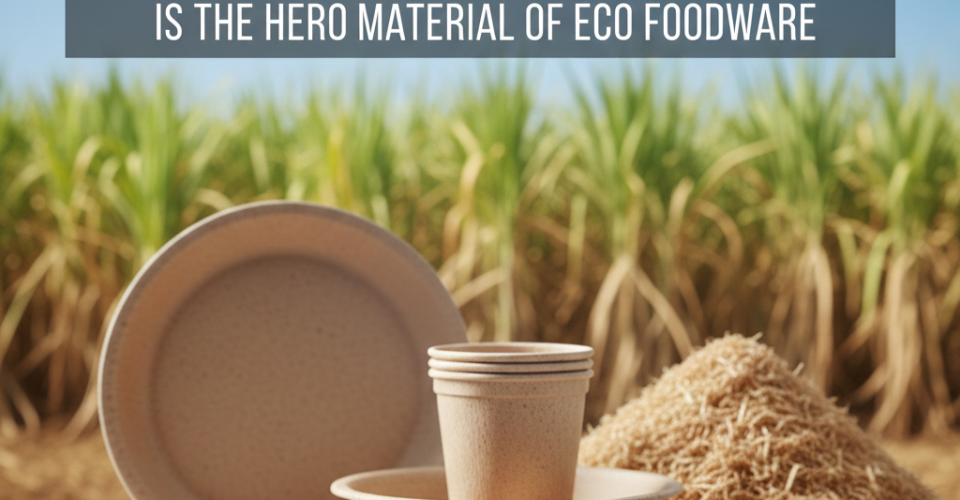
Bagasse is fast becoming the unsung hero of sustainable foodservice packaging. Once considered agricultural waste, this byproduct of sugarcane processing is now transforming how restaurants, caterers, and institutions serve meals sustainably.
Turning Waste Into Value
Bagasse is produced after extracting juice from sugarcane. The fibrous pulp, instead of being burned or discarded, is pulped and molded into durable, compostable packaging. It’s a perfect example of circular economy principles in action.
Performance That Rivals Plastic
Bagasse foodware combines lightness with strength, resistant to heat, grease, and moisture. It’s ideal for both dine-in and takeaway environments.
- Heat Safe: Up to 200°F.
- Microwave- & Freezer-Safe.
- Decomposes within 90 days in composting conditions.
Why Businesses Are Adopting It
Bagasse products are 30–40% lighter than equivalent paperboard, reducing freight costs and carbon emissions. Major hotel chains and healthcare systems use bagasse trays for portion control and waste reduction.
Bagasse also meets FDA food-contact standards and offers natural whiteness without chlorine bleaching, a key requirement for food safety and sustainability compliance.
Economic & Environmental Benefits
Switching from plastic to bagasse can cut carbon footprint by up to 70%, according to a 2023 World Packaging Organisation study. It also improves brand reputation with eco-conscious customers demanding visible sustainability.
FAQs
Q1: Is bagasse reusable?
A: It’s designed for single-use, but compostable after disposal.
Q2: How does bagasse compare to paper?
A: Stronger, thicker, and more heat-resistant.Q3: Does it require special disposal?
A: No, it decomposes in industrial compost or soil-rich environments.
Q3: Does it require special disposal?
A: No, it decomposes in industrial compost or soil-rich environments.
